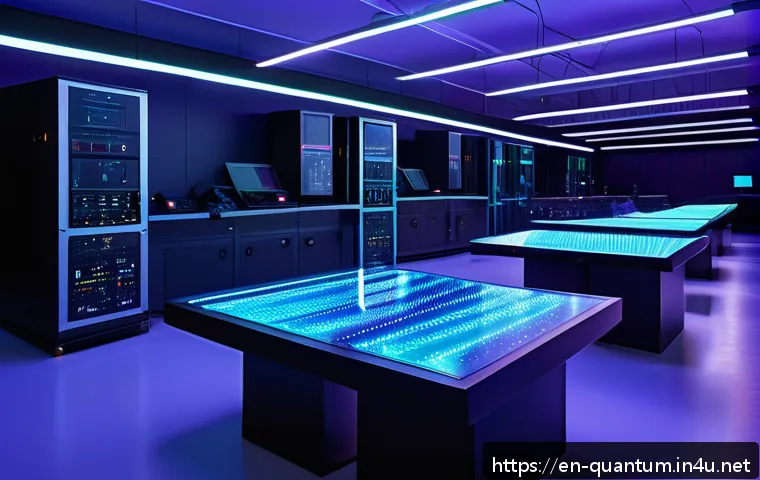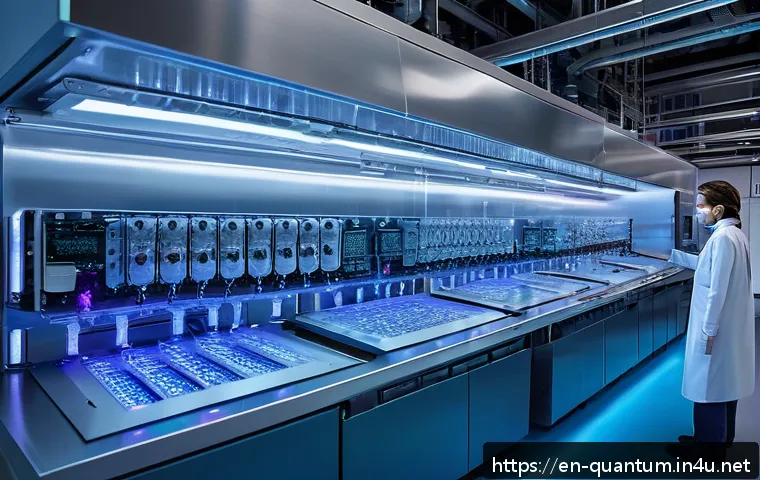
Quantum computing promises to revolutionize industries from cryptography to drug discovery, yet it faces daunting physical challenges that could slow its progress.
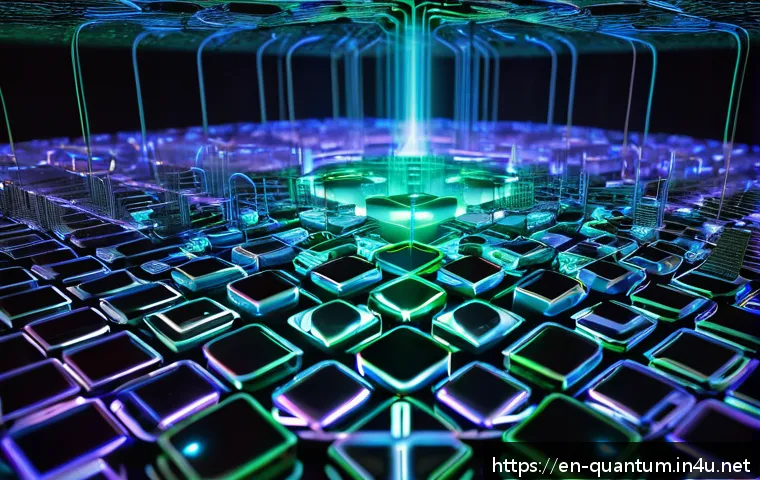
As we witness rapid advancements in qubit technology and error correction, the question remains: what fundamental limits stand in the way? Recent breakthroughs highlight both incredible potential and stubborn obstacles lurking at the quantum scale.
If you’re curious about what’s truly holding back the quantum leap and how researchers are pushing boundaries, this deep dive will shed light on the fascinating interplay between physics and computing’s next frontier.
Stick around to explore how unlocking these quantum limits could shape our technological future.
Understanding the Delicate Nature of Qubit Stability
Fragility of Quantum States in Real Environments
Quantum bits, or qubits, are incredibly sensitive to their surroundings. Unlike classical bits, which are robust in storing either a 0 or 1, qubits exist in superpositions that can easily collapse due to the slightest environmental interference.
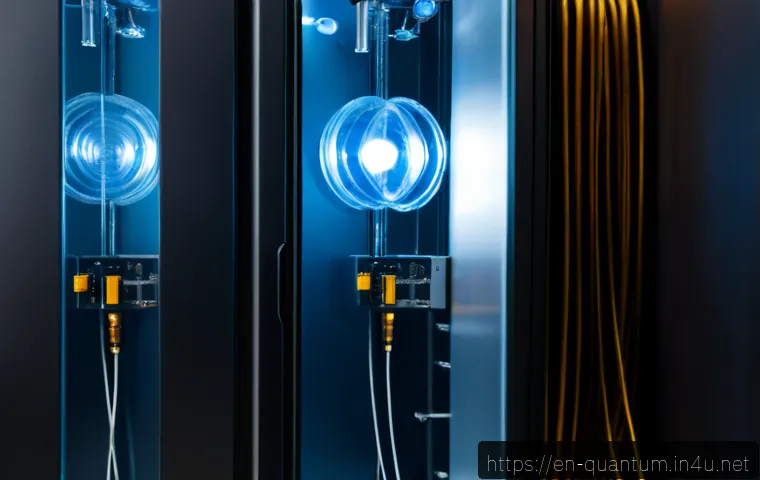
Thermal fluctuations, electromagnetic noise, and even cosmic rays can nudge a qubit out of its delicate quantum state. From my experience reading up on experimental setups, researchers often have to cool their quantum processors to near absolute zero temperatures to minimize these disruptions.
Even then, maintaining coherence—where qubits retain their quantum information long enough for calculations—is a constant battle. It’s like trying to balance a spinning top on a shaky table; any tiny disturbance can cause it to fall.
Material Imperfections and Manufacturing Challenges
When I first learned about the fabrication of qubits, it struck me how minute imperfections in materials can dramatically affect performance. Superconducting qubits, one of the leading technologies, require ultra-pure materials and precise nanofabrication techniques.
Tiny defects or impurities in the substrate or wiring can introduce noise, causing errors. This is a major bottleneck because scaling up qubit numbers while maintaining uniform quality is incredibly tough.
It’s like assembling a fleet of race cars where every engine needs to be flawless—any slight inconsistency can slow the entire team down.
Trade-offs Between Qubit Types and Stability
Different qubit technologies—trapped ions, superconducting circuits, topological qubits—each come with their own stability profiles. For instance, trapped ions offer longer coherence times but are harder to scale due to bulky setups and slow gate operations.
Superconducting qubits are faster and more scalable but suffer from shorter coherence times. I find it fascinating how researchers must weigh these trade-offs depending on the application.
It’s not just about picking the “best” qubit but matching the right qubit to the right task while constantly pushing physical limits.
Error Correction’s Role and Its Resource Demands
Why Quantum Error Correction Is Essential
Quantum error correction (QEC) is the unsung hero that makes practical quantum computing possible. Given how fragile qubits are, errors are inevitable during computation.
QEC works by encoding logical qubits into multiple physical qubits, detecting and correcting errors without measuring the quantum information directly.
From what I’ve gathered, this process is extremely resource-intensive—sometimes requiring hundreds or thousands of physical qubits to represent a single error-protected logical qubit.
It’s a bit like building a fortress around a delicate treasure; the more protection you need, the bigger and more complex the structure becomes.
Impact on Quantum Processor Size and Complexity
The overhead that error correction introduces is staggering. Scaling up a quantum computer isn’t simply a matter of adding more qubits; it’s about managing exponentially more complex error correction protocols.
Researchers have shared that current quantum processors are still far from the fault-tolerant threshold where error correction becomes fully effective.
This means that for the near future, many quantum devices will remain “noisy intermediate-scale quantum” (NISQ) machines, limited in their practical utility.
The path to fully error-corrected quantum computing is like climbing a mountain where each step demands exponentially more effort and resources.
Innovations in Reducing Error Correction Overhead
Despite the challenges, there have been exciting advances aiming to reduce the cost of error correction. Techniques such as surface codes, cat codes, and bosonic codes are being refined to improve efficiency.
Additionally, hardware improvements like higher-fidelity gates and better qubit connectivity help lower error rates, reducing the burden on QEC protocols.
I’ve noticed that many teams are also exploring hybrid architectures that combine classical error mitigation with quantum error correction. It’s a dynamic area where physics, computer science, and engineering blend to chip away at one of the biggest roadblocks.
Scaling Up: From Few Qubits to Quantum Supremacy
Challenges in Interconnecting Large Qubit Arrays
Scaling quantum systems isn’t just about increasing qubit count; it’s about how those qubits communicate. As systems grow, maintaining coherent interactions across all qubits becomes exponentially harder.
Crosstalk and unintended coupling between qubits can introduce errors, and wiring complexity skyrockets. I recall reading about novel 3D integration techniques and microwave photonics being explored to tackle these issues, but these solutions bring their own engineering hurdles.
It’s like building a city where every road must be perfectly synchronized to prevent traffic jams and accidents.
Maintaining Uniformity and Synchronization at Scale
Uniform control signals and timing synchronization are crucial when you have hundreds or thousands of qubits operating simultaneously. Slight timing mismatches can cause destructive interference and computational errors.
From what I’ve seen in lab reports, researchers use ultra-stable clocks and advanced pulse-shaping techniques to maintain this delicate balance. But the complexity grows rapidly, and scaling beyond a few dozen qubits requires breakthroughs in both hardware and software control systems.
Current Milestones and Future Roadmaps
Quantum supremacy, where a quantum computer performs a task beyond classical capabilities, has already been demonstrated on small scales. However, practical, error-corrected quantum advantage for real-world problems is still on the horizon.
Roadmaps from major players like IBM, Google, and IonQ outline incremental scaling with continuous hardware improvements and better error correction algorithms.
It’s encouraging to see concrete timelines, but the journey is long and filled with technical landmines.
Environmental Isolation and Cooling Requirements
Necessity of Extreme Cryogenic Conditions
Most superconducting qubit systems require temperatures just a fraction above absolute zero, typically around 10-20 millikelvin. Achieving and maintaining such cryogenic conditions demands complex dilution refrigerators that are bulky and expensive.
I’ve always been amazed by how these machines, often the size of a refrigerator or larger, can maintain such extreme temperatures consistently. The cooling infrastructure itself introduces practical limits on the size and portability of quantum processors.
Shielding from Electromagnetic and Vibrational Noise
Beyond temperature, shielding qubits from electromagnetic interference and mechanical vibrations is critical. Even minuscule vibrations from nearby equipment or building movements can disrupt qubit coherence.
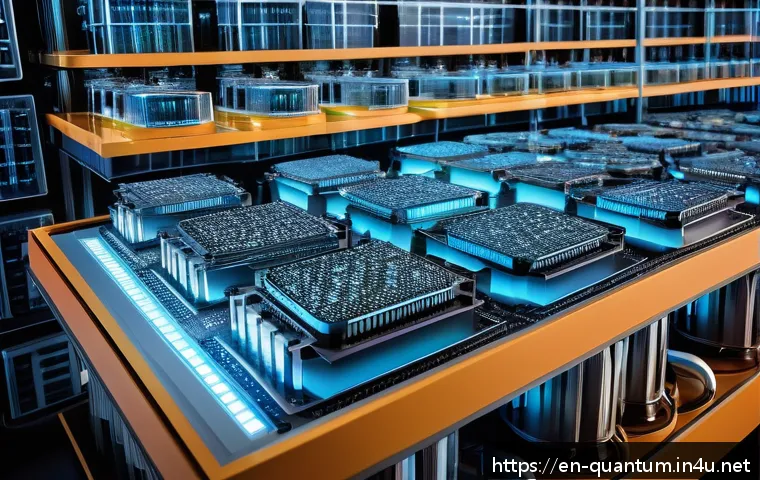
Labs often use elaborate magnetic shields and vibration isolation platforms. This level of environmental control adds to the cost and complexity of operating quantum computers and makes widespread deployment outside specialized facilities challenging.
Prospects of Room-Temperature Quantum Computing
While most qubit technologies require cryogenics, researchers are exploring alternatives like diamond nitrogen-vacancy centers or silicon spin qubits that might operate at higher temperatures.
Although these systems currently lag behind in coherence times and gate fidelities, the potential to eliminate cooling requirements could revolutionize accessibility.
It’s a field that feels like a race against time and physics, where even small breakthroughs could open new frontiers.
Fundamental Quantum Limits and Noise Sources
Decoherence Mechanisms at the Quantum Scale
Decoherence, the loss of quantum information to the environment, remains the fundamental enemy of quantum computing. This process arises from unavoidable interactions between qubits and their surroundings, leading to information leakage.
I find it insightful how this phenomenon links deeply to the laws of thermodynamics and quantum mechanics themselves. Even if we perfect hardware, these fundamental noise sources impose a ceiling on qubit performance that can only be pushed, not eliminated.
Impact of Measurement and Readout Errors
Measuring qubits without destroying their quantum information is notoriously difficult. Imperfect readout techniques introduce errors that compound computational mistakes.
From what I understand, improving readout fidelity is as crucial as enhancing qubit coherence. Advances in quantum non-demolition measurements and fast, high-fidelity detectors are making headway, but the problem is far from solved.
It’s like trying to peek at a soap bubble without popping it—extremely delicate and tricky.
Quantum Speed Limits and Gate Fidelity Constraints
Quantum gates must be fast enough to perform computations before decoherence sets in, but fast operations often reduce fidelity due to control errors.
This trade-off is governed by fundamental speed limits dictated by the energy-time uncertainty principle. I’ve seen experimental groups carefully optimize pulse shapes and gate durations to find the sweet spot, but this balancing act is a persistent challenge.
It’s a reminder that quantum computing isn’t just about power but precision.
| Quantum Challenge | Description | Impact on Quantum Computing | Current Strategies |
|---|---|---|---|
| Qubit Decoherence | Loss of quantum information due to environmental interactions | Limits coherence time and computational accuracy | Cryogenic cooling, material purity, shielding |
| Error Correction Overhead | High physical qubit count needed per logical qubit | Increases hardware complexity and resource demands | Surface codes, bosonic codes, hybrid error mitigation |
| Scaling Complexity | Challenges in qubit interconnectivity and synchronization | Limits size and performance of quantum processors | 3D integration, advanced control electronics |
| Environmental Noise | Interference from temperature, vibrations, and EM fields | Causes errors and qubit instability | Isolation platforms, magnetic shielding |
| Measurement Errors | Imperfect readout of quantum states | Reduces gate fidelity and computational reliability | Quantum non-demolition techniques, improved detectors |
Balancing Innovation with Physical Realities
The Human Element Behind Quantum Progress
What often gets overlooked is the sheer persistence and creativity of researchers pushing quantum computing forward. From what I’ve gathered attending talks and reading interviews, many teams face daily setbacks but use these as learning opportunities.
It’s inspiring to see how interdisciplinary collaboration—combining physics, engineering, computer science, and materials science—is crucial to overcoming these physical barriers.
The journey feels less like a sprint and more like a marathon fueled by passion and incremental breakthroughs.
Anticipating New Paradigms and Breakthroughs
While current technologies wrestle with physical constraints, emerging ideas like topological quantum computing or photonic quantum processors hold promise to circumvent some fundamental limits.
I find it exciting how the field remains vibrant and open to radical innovation. The next big leap may come from a completely unexpected direction, reshaping what we believe is possible.
This uncertainty keeps the quantum computing landscape thrilling and full of potential.
Realistic Expectations for Quantum Impact
Despite the hype, it’s important to keep realistic expectations. Quantum computing will likely complement, not replace, classical computing for many years.
The physical limits and engineering challenges mean widespread adoption is a gradual process. However, the breakthroughs already achieved hint at transformative applications on the horizon—like breaking cryptographic codes, simulating complex molecules, or optimizing vast networks.
The excitement lies in watching these challenges being met step by step, turning quantum’s promise into reality.
Conclusion
Quantum computing is a field filled with incredible promise, yet it demands overcoming profound physical and engineering challenges. The delicate nature of qubits, the complexity of error correction, and the difficulties in scaling require relentless innovation and collaboration. While practical, large-scale quantum computers are still on the horizon, steady progress is turning theoretical possibilities into tangible achievements. This journey is as much about perseverance as it is about groundbreaking science.
Useful Information to Keep in Mind
1. Qubit stability is highly sensitive to environmental factors, requiring extreme isolation and precise material fabrication.
2. Quantum error correction is essential but resource-intensive, often needing many physical qubits to protect a single logical qubit.
3. Scaling quantum processors involves complex challenges in qubit interconnectivity, synchronization, and control.
4. Maintaining cryogenic temperatures and shielding from noise are critical for current superconducting qubit systems.
5. Emerging technologies and hybrid approaches may reduce overhead and open pathways to more accessible quantum computing.
Key Takeaways
Quantum computing faces inherent physical limits that cannot be fully eliminated but only managed through advanced techniques. The balance between speed, fidelity, and error correction defines current progress. Collaboration across multiple disciplines fuels ongoing breakthroughs, yet realistic expectations are vital as quantum technology gradually matures. Ultimately, the future impact of quantum computing hinges on overcoming these challenges step by step, blending innovation with practical engineering.
Frequently Asked Questions (FAQ) 📖
Q: uestions about Quantum Computing ChallengesQ1: What are the main physical obstacles slowing down quantum computing development?
A: One of the biggest hurdles is maintaining qubit stability. Qubits are extremely sensitive to environmental noise like temperature fluctuations and electromagnetic interference, causing errors known as decoherence.
This instability makes it tough to keep quantum information intact long enough to perform complex calculations. Additionally, scaling up from a few qubits to thousands or millions introduces engineering challenges around precise control and error correction.
From my experience reading multiple research updates, these physical constraints remain the bottleneck despite impressive progress in materials and cooling technologies.
Q: How do error correction techniques help, and why aren’t they a complete solution yet?
A: Quantum error correction is crucial because qubits can lose information easily, but it comes at a cost. These methods require extra qubits—sometimes many more than the logical qubits you want to use—which complicates hardware design and increases resource demands.
While error correction codes have improved significantly, implementing them at large scale is still experimentally daunting. In practical terms, it’s like trying to fix a fragile glass sculpture while it’s being jostled; you need not only delicate tools but also a stable environment.
Researchers I’ve followed stress that until error rates drop dramatically and qubit quality improves, error correction alone won’t unlock full-scale quantum advantage.
Q: What fundamental limits does quantum physics impose on computing power?
A: Quantum mechanics itself sets some theoretical boundaries, such as the no-cloning theorem which prevents perfect copying of quantum states, and the Heisenberg uncertainty principle limiting measurement precision.
These principles restrict how information can be manipulated and preserved. Moreover, physical resources like coherence time and gate fidelity place practical caps on computation length and complexity.
From what I’ve gathered, these aren’t just engineering issues but reflect deep quantum laws. That said, ongoing innovations in qubit design and novel materials suggest these limits can be pushed further, though probably never completely eliminated.
It’s a thrilling balance between what nature allows and what human ingenuity can achieve.