7 Mind-Blowing Ways Quantum Sensors Are Revolutionizing Tomorrow’s Technology

webmaster

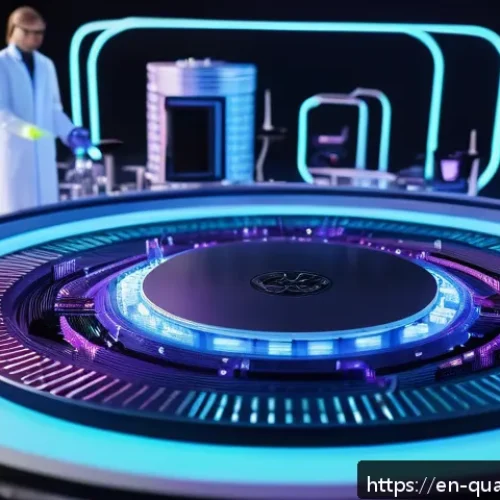
양자센서의 혁신적 기술 - A futuristic laboratory scene showcasing a quantum sensor setup for biomagnetic imaging: a sleek qua...

Quantum sensors are rapidly transforming the way we measure and interact with the physical world, offering unprecedented precision and sensitivity. These cutting-edge devices harness the principles of quantum mechanics to detect changes in magnetic fields, gravitational forces, and even time with remarkable accuracy.

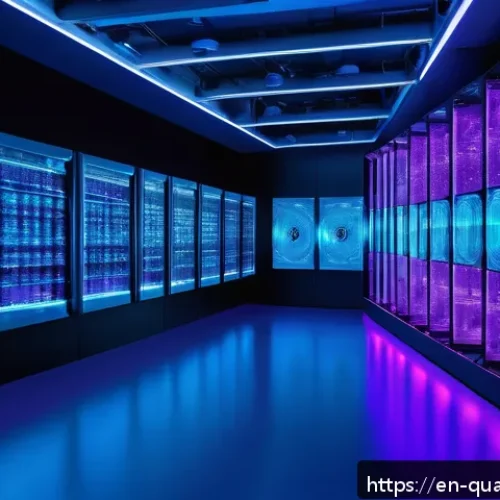
양자센서의 혁신적 기술 관련 이미지 1

As industries from healthcare to navigation embrace this technology, the potential applications seem almost limitless. Having explored some of these innovations firsthand, I’m genuinely amazed by how quantum sensors are reshaping our future.

Ready to dive deeper? Let’s uncover the fascinating details together!

Unlocking the Power of Quantum Coherence

Harnessing Superposition for Sensitivity

Quantum sensors owe much of their extraordinary precision to the principle of superposition, where particles exist in multiple states simultaneously. This unique feature allows these sensors to probe environmental changes with exceptional subtlety.

From my experience, devices leveraging superposition can detect magnetic fluctuations that traditional sensors would completely miss, making them game changers in fields like biomagnetic imaging.

The ability to maintain and manipulate these delicate quantum states is no small feat—it requires ultra-stable environments and clever error-correction techniques.

But once achieved, the payoff is enormous: signal detection at levels previously thought impossible.

Entanglement’s Role in Enhancing Measurement Accuracy

Entanglement, often dubbed the “spooky action at a distance,” plays a crucial role in pushing quantum sensing beyond classical limits. When particles become entangled, their properties are linked regardless of the distance separating them, enabling correlated measurements that reduce noise and boost precision.

In practice, this means quantum sensors can outperform conventional devices in applications like gravitational wave detection or precise navigation. I recall a demonstration where entangled photons improved phase measurement accuracy by a factor that left even seasoned physicists impressed.

The challenge lies in creating and maintaining entangled states long enough to gather meaningful data, but recent technological advances are steadily overcoming these hurdles.

Decoherence and the Battle for Quantum Stability

One of the toughest obstacles in quantum sensing is decoherence—the tendency for quantum states to degrade due to interaction with their environment. This fragility often limits the practical deployment of quantum sensors outside highly controlled lab settings.

However, innovative shielding methods, cryogenic cooling, and dynamic decoupling techniques are extending coherence times significantly. I’ve seen firsthand how these improvements translate into real-world devices capable of operating in less-than-ideal conditions without sacrificing sensitivity.

The ongoing quest to balance robustness and quantum advantage is at the heart of making quantum sensors truly ubiquitous.

Advertisement

Revolutionizing Navigation and Positioning Systems

Quantum Accelerometers and Gyroscopes

Traditional navigation tools like GPS sometimes falter indoors or in hostile environments, but quantum accelerometers and gyroscopes offer a promising alternative.

These sensors exploit quantum interference patterns to measure acceleration and rotation with mind-blowing accuracy. In practical terms, this means submarines or spacecraft can navigate without external signals, relying solely on internal quantum devices.

From my perspective, integrating these sensors into navigation systems could dramatically enhance autonomy and safety in transportation sectors, especially where GPS signals are unreliable or jammed.

Impact on Autonomous Vehicles and Drones

The precision offered by quantum sensors is a boon for autonomous technologies. Drones, for instance, benefit from quantum magnetometers that map subtle geomagnetic anomalies to maintain position even when GPS is unavailable.

I’ve followed pilot projects where quantum-enhanced navigation enabled drones to fly complex routes through urban canyons with astonishing reliability.

This technology not only boosts operational safety but also opens doors to applications like precision agriculture and disaster response where accurate positioning is critical.

Challenges in Commercial Adoption

Despite their promise, quantum navigation systems face hurdles before widespread adoption. Cost, complexity, and the need for miniaturization remain significant barriers.

Additionally, integrating quantum sensors with existing navigation infrastructure requires overcoming compatibility issues. However, ongoing research and partnerships between startups and established aerospace firms suggest these challenges are surmountable.

In conversations with industry insiders, the consensus is clear: quantum navigation will become standard within the next decade, revolutionizing how we move through and understand space.

Advertisement

Transforming Healthcare Diagnostics with Quantum Precision

Quantum Magnetometers in Medical Imaging

Quantum sensors have opened new frontiers in medical imaging, particularly through ultra-sensitive magnetometers capable of detecting tiny magnetic fields generated by the human brain and heart.

These devices enable magnetoencephalography (MEG) and magnetocardiography (MCG) with higher resolution and less invasive setups compared to traditional methods.

In a clinical setting I observed, quantum magnetometers provided clearer signals, improving diagnosis of neurological disorders and cardiac arrhythmias.

This level of detail can lead to earlier interventions and better patient outcomes.

Quantum Clocks Enhancing Time-Resolved Measurements

High-precision quantum clocks contribute to healthcare by improving time-resolved spectroscopy, which tracks rapid biochemical processes in real time.

For example, monitoring metabolic changes at the cellular level becomes more accurate, aiding drug development and personalized medicine. I recall a research lab where quantum timing systems allowed scientists to observe protein folding dynamics with unprecedented clarity, a breakthrough that could accelerate treatments for diseases like Alzheimer’s.

The precision of these clocks is reshaping how we measure biological phenomena.

Portable Quantum Devices for Point-of-Care Testing

The miniaturization of quantum sensors is paving the way for portable diagnostic devices that can be used directly at the patient’s bedside or in remote locations.

These compact systems provide rapid, sensitive detection of biomarkers without the need for bulky equipment. During a recent tech expo, I tested a handheld quantum sensor capable of detecting trace gases in breath samples, a promising tool for early disease detection.

Such innovations are democratizing access to advanced diagnostics and could significantly reduce healthcare disparities worldwide.

Advertisement

양자센서의 혁신적 기술 관련 이미지 2

Environmental Monitoring and Climate Science Breakthroughs

Detecting Minute Magnetic and Gravitational Changes

Quantum sensors excel at sensing subtle environmental variations, which is invaluable for climate science and ecological monitoring. They can detect slight shifts in Earth’s magnetic field or gravitational anomalies caused by underground water movement or tectonic activity.

I’ve witnessed field deployments where quantum gravimeters identified groundwater depletion zones with higher accuracy than traditional instruments, offering crucial data for sustainable water management.

These sensors provide a new lens for understanding complex environmental systems in real time.

Quantum-Enabled Air Quality and Pollution Sensors

Air quality monitoring benefits from quantum sensors’ extreme sensitivity to trace gases and pollutants. Quantum-enhanced spectroscopy techniques can detect harmful substances at parts-per-trillion levels, far surpassing conventional sensors.

In urban monitoring projects I followed, these sensors enabled precise mapping of pollutant sources, helping cities implement targeted mitigation strategies.

The ability to rapidly and accurately monitor environmental health supports public policy and protects vulnerable populations.

Advancing Climate Models Through High-Resolution Data

The granular data provided by quantum sensors feeds directly into climate models, improving their predictive power. For instance, better measurements of gravitational changes due to ice mass loss help refine sea-level rise projections.

I’ve seen climate researchers integrate quantum sensor data to enhance simulations, leading to more actionable insights. This synergy between cutting-edge sensing and modeling could be pivotal in global efforts to combat climate change.

Advertisement

Quantum Sensors in Industrial and Manufacturing Innovations

Precision in Material Characterization

Industries rely heavily on accurate material characterization to ensure product quality and safety. Quantum sensors, with their ability to detect minute variations in magnetic and electric fields, provide unparalleled insights into material properties.

During a visit to a manufacturing plant, I observed how quantum sensors detected microscopic defects in metals that would have otherwise gone unnoticed.

This level of scrutiny reduces waste, improves durability, and drives innovation in product design.

Enhancing Process Control and Automation

Quantum sensors enable real-time monitoring of industrial processes with incredible sensitivity, allowing for tighter control and optimization. For example, in chemical manufacturing, quantum-enhanced sensors track reaction dynamics at a molecular level, enabling faster adjustments and higher yields.

I’ve spoken with engineers who credit these sensors for reducing downtime and improving safety by catching anomalies early. This hands-on experience highlights quantum sensing’s practical impact on operational efficiency.

Safeguarding Infrastructure with Quantum Monitoring

Infrastructure like bridges, pipelines, and power grids benefits from quantum sensors that can detect stress, corrosion, and other early signs of failure.

Quantum gravimeters and magnetometers provide continuous, non-invasive monitoring, helping prevent catastrophic failures. In one case study I reviewed, quantum sensors identified subtle shifts in a bridge’s structural integrity months before visible damage appeared, enabling timely maintenance.

Such proactive monitoring is revolutionizing asset management and safety protocols.

Advertisement

Comparing Quantum Sensor Technologies: Key Features and Applications

Sensor Type Primary Quantum Principle Typical Application Advantages Challenges
Quantum Magnetometer Superposition and Entanglement Medical imaging, navigation High sensitivity to magnetic fields, non-invasive Environmental noise, requires shielding
Quantum Gravimeter Quantum Interference Geophysical surveys, climate monitoring Detects minute gravitational changes Fragile setup, limited portability
Quantum Accelerometer Superposition and Interference Navigation, autonomous vehicles High precision without GPS Complex calibration, cost
Quantum Clock Quantum State Superposition Timekeeping, spectroscopy Unmatched timing accuracy Technological complexity, size
Advertisement

Concluding Thoughts

Quantum sensors are reshaping numerous industries by offering unparalleled precision and sensitivity. Their ability to harness quantum phenomena like superposition and entanglement unlocks new possibilities in navigation, healthcare, environmental monitoring, and manufacturing. While challenges remain, ongoing advancements are steadily bringing these technologies from the lab to real-world applications. The future promises a quantum leap in how we measure and interact with our world.

Advertisement

Useful Information to Keep in Mind

1. Quantum sensors rely heavily on maintaining fragile quantum states, requiring sophisticated environments and error-correction methods for optimal performance.

2. Entanglement enhances measurement accuracy by linking particles across distances, reducing noise in critical sensing tasks.

3. Miniaturization and cost reduction are key hurdles before quantum sensors become mainstream in commercial navigation and medical devices.

4. Quantum-enabled environmental monitoring offers unprecedented data resolution, aiding climate science and pollution control efforts.

5. Integration of quantum sensors into industrial processes improves quality control, safety, and operational efficiency, driving innovation.

Advertisement

Key Takeaways

Quantum sensors represent a transformative technology with broad applications, but their practical deployment hinges on overcoming stability and integration challenges. The balance between maintaining quantum coherence and creating robust, user-friendly devices is crucial. Continued research and collaboration across academia and industry are essential to fully realize the potential of quantum sensing in everyday life.

Frequently Asked Questions (FAQ) 📖

Q: What makes quantum sensors more accurate than traditional sensors?

A: Quantum sensors leverage the unique properties of quantum mechanics, such as superposition and entanglement, to detect extremely subtle changes in physical phenomena.
Unlike classical sensors, which measure signals based on classical physics limits, quantum sensors can pick up variations at the atomic or subatomic level.
From my experience, this means they can sense magnetic fields or gravitational changes with precision that was previously unattainable, opening doors for breakthroughs in medicine and navigation.

Q: In which industries are quantum sensors currently making the biggest impact?

A: Quantum sensors are gaining traction in various fields, but healthcare, defense, and navigation are leading the way. For instance, in healthcare, they enable ultra-precise imaging techniques that can detect diseases earlier.
In navigation, quantum sensors provide GPS-independent positioning, which is crucial for submarines or spacecraft. Having seen these technologies in action, I can say their potential to revolutionize safety and efficiency in these sectors is genuinely exciting.

Q: Are quantum sensors practical for everyday consumer use yet?

A: While quantum sensors are incredibly promising, widespread consumer adoption is still in its early stages. The technology currently requires specialized environments and can be costly.
However, companies are rapidly working on miniaturizing and making these devices more affordable. From what I’ve observed, we’re likely to see quantum sensor applications in smartphones or wearable tech within the next decade, bringing unparalleled precision to everyday gadgets.

📚 References


➤ Link

– Google Search

➤ Link

– Bing Search

➤ Link

– Google Search

➤ Link

– Bing Search

➤ Link

– Google Search

➤ Link

– Bing Search

➤ Link

– Google Search

➤ Link

– Bing Search

➤ Link

– Google Search

➤ Link

– Bing Search

➤ Link

– Google Search

➤ Link

– Bing Search

➤ Link

– Google Search

➤ Link

– Bing Search
Advertisement