
Ever wondered what truly makes our world tick, down to the tiniest, most elusive particles? I mean, we’re talking about the fundamental building blocks of everything around us, from the morning coffee in your hand to the screen you’re reading this on.
For the longest time, chemistry seemed pretty straightforward, right? Mix A and B, get C. But then you peek behind the curtain, and suddenly, it’s not just about mixing liquids; it’s a breathtaking dance of electrons and energy levels, governed by rules that feel more like science fiction than textbook facts.
I vividly remember diving into quantum chemistry for the first time, feeling a mix of absolute awe and a touch of “Is this even real?” It’s a field that literally rewrites our understanding of how atoms bond, why molecules behave the way they do, and even unlocks the secrets to designing brand new materials with properties we can only dream of today.
Think about it: drug discovery, advanced electronics, even the next generation of sustainable energy solutions – they’re all being revolutionized by insights from this incredible realm.
It’s not just theoretical anymore; it’s directly impacting our future in ways that are truly mind-blowing. If you’re ready to unravel some of the universe’s most fascinating mysteries, and see how this cutting-edge science is shaping tomorrow, then you’re in for a treat.
Let’s delve deeper and uncover the amazing world of quantum chemistry together.
Ah, diving into quantum chemistry, are we? It’s truly one of those fields that just keeps on giving, isn’t it? I remember feeling like I’d stumbled upon some secret code of the universe when I first started learning about it.
It’s not just about tiny particles, you know. It’s about rewriting our understanding of pretty much *everything* and opening doors to innovations that still feel a bit like science fiction.
Trust me, once you get a taste of how profoundly quantum chemistry impacts our world, you’ll see why it’s generating so much buzz!
Unveiling the Electron’s Secret Dance: The Core of Everything
The Quantum Rules for Molecular Behavior
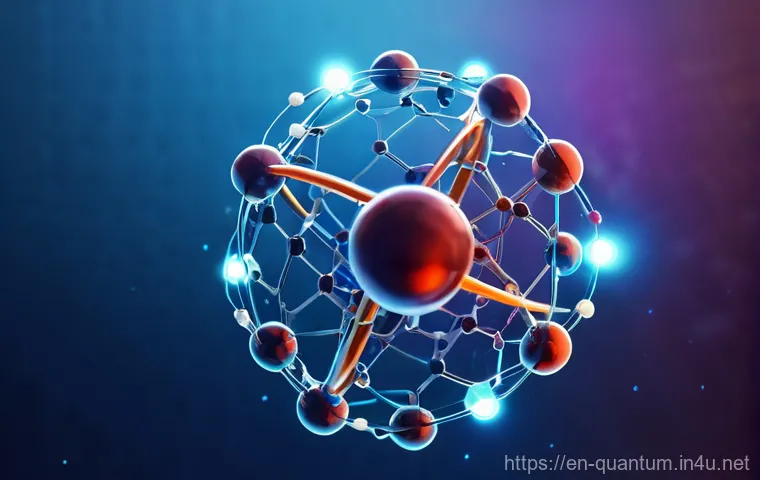
You know, for years, we thought of atoms and molecules in a pretty straightforward, almost billiard-ball-like way. But then quantum mechanics swooped in and showed us that it’s far more intricate, more like a cosmic ballet than a simple game of pool. At its heart, quantum chemistry is all about applying the principles of quantum mechanics to chemical systems, giving us a physics-based, incredibly detailed understanding of molecular structure, properties, and how molecules react. It’s about how those tiny electrons, those negatively charged clouds, actually behave, shaping everything from how atoms bond to the very geometry of a molecule. Honestly, it’s mind-boggling when you realize that something as seemingly simple as a molecule’s shape is directly tied to these complex quantum rules. It explains why atoms connect in specific ways and why molecules adopt their unique three-dimensional arrangements. Classical models can give you a rough sketch, sure, but quantum mechanics provides the detailed blueprint.
Beyond Classical Limits: Seeing What We Couldn’t Before
One of the coolest parts is how quantum chemistry has pushed us beyond what classical physics could ever explain. Remember the Born-Oppenheimer approximation? It’s a genius move that simplifies those incredibly complex interactions by treating electron and nuclear motions separately, making calculations much more manageable. This breakthrough, along with theories like valence bond theory and molecular orbital theory, helps us understand exactly how electrons are distributed in a molecule, which, as you can imagine, totally dictates its chemical behavior. I’ve personally seen how understanding these fundamental aspects has allowed researchers to predict molecular properties and reaction outcomes with incredible accuracy, which is just huge for so many areas, from pharma to new materials. We’re talking about finally getting a clear picture of the quantum mechanical motions of entire molecules, which was basically impossible to observe directly until relatively recently. It’s like we’ve been given a new pair of glasses that let us see the universe in a whole new resolution.
Crafting Tomorrow’s Tech: Designing Materials Atom by Atom
Building Better Materials from the Ground Up
If you’re anything like me, you’re probably always looking for the next big thing, right? Well, when it comes to materials, quantum chemistry is where the magic happens. We’re talking about understanding the electronic properties of new materials, which is absolutely crucial for developing everything from advanced electronics to more efficient energy storage solutions. It’s about simulating and designing materials with specific, tailored qualities right down to the atomic level. Imagine being able to predict how a material will behave before you even synthesize it in the lab – that’s the power we’re tapping into. Quantum chemistry helps us analyze and predict chemical properties with remarkable precision, which is a total game-changer for inventing things like durable, lightweight, and less expensive materials. I’ve seen some incredible work in areas like designing new materials for solar cells and batteries, even catalysts, all driven by these precise quantum calculations. This deep understanding of how atoms and electrons interact at a quantum level is genuinely accelerating the discovery process and allowing us to fine-tune materials for optimal performance.
The Quantum Leap in Electronic Design
And it’s not just about physical strength or efficiency; it’s revolutionizing electronics too. Think about the components in your smartphone or computer – many modern electronic devices are actually designed using principles rooted in quantum mechanics. The study of semiconductors, for instance, which is pure quantum chemistry at its finest, led to the invention of the diode and the transistor, making modern electronics, computers, and telecommunications devices possible. It’s wild to think that things like flash memory chips in USB drives even use quantum tunneling to erase memory cells! Researchers are constantly working to understand and manage electron interactions in what we call “quantum materials” – materials that just don’t play by classical physics rules. These unique materials, like superconductors and topological insulators, hold immense potential for things like faster computers, improved optical sensors, and even levitating trains. We’re talking about creating superconductors that flow without resistance at temperatures closer to room temperature, which would be a colossal leap forward for energy efficiency. It’s a whole new era of material design, and frankly, it’s thrilling to watch unfold.
The Quantum Leap in Medicine: Revolutionizing Drug Discovery
Accelerating the Search for New Cures
Okay, let’s talk about something that hits close to home for so many of us: healthcare. The world of drug discovery used to be a long, painstaking, and often frustrating process of trial and error in the lab. But quantum chemistry? It’s literally revolutionizing how we find and develop new medicines. This field provides incredibly precise molecular insights that classical methods just can’t touch. Quantum chemistry allows researchers to simulate molecular interactions with a level of detail that was previously unimaginable, enabling them to design new drugs, predict molecular behaviors, and optimize treatments much faster and more accurately. I’ve seen how these calculations can predict the binding affinity of a drug molecule to a protein target, which is absolutely critical for identifying potential drug candidates and refining their design. It’s not just speeding things up; it’s making the whole process smarter and more efficient, helping us avoid “dead-end” lead compounds and focusing on what truly works.
From Simulation to Personalized Medicine
What’s truly exciting is the move towards personalized medicine. Imagine treatment plans tailored specifically to an individual’s genetic makeup, all thanks to quantum simulations. Quantum chemistry helps us understand the mechanisms of disease at a fundamental level and then develop new treatments based on those insights. Companies like Google and IBM are already leveraging quantum computing to simulate complex protein folding and interactions, which is a cornerstone of drug development. This isn’t just theory anymore; it’s leading to advancements in therapies for diseases like cancer, Alzheimer’s, and even viral infections. Methods like Density Functional Theory (DFT) and Hartree-Fock (HF) are being used to model electronic structures with remarkable accuracy, making computational drug design incredibly powerful. And hybrid methods like QM/MM (Quantum Mechanics/Molecular Mechanics) are making it possible to accurately model large biological systems by combining quantum accuracy for critical regions with classical efficiency for the rest. It’s about more than just finding a drug; it’s about understanding life at its most fundamental level to improve ours.
| Application Area | How Quantum Chemistry Helps | Impact & Benefits |
|---|---|---|
| Drug Discovery | Predicts molecular structures, properties, and drug-target binding affinities. Enables detailed simulation of molecular interactions. | Accelerated drug development, more effective treatments, personalized medicine. |
| Materials Science | Simulates electronic structure, optical, and mechanical properties of new materials. Allows atomic-level design. | Discovery of advanced materials (e.g., for electronics, batteries, superconductors), enhanced durability, lower costs. |
| Sustainable Energy | Designs efficient catalysts, solar cells, and battery materials. Optimizes energy conversion and storage processes. | Cleaner energy production, improved energy efficiency, reduced carbon footprint. |
| Chemical Reactions | Unravels reaction mechanisms, predicts rate coefficients and branching ratios. | Optimized industrial processes, development of new synthesis routes without extensive experimentation. |
Powering Our Future: Quantum’s Role in Sustainable Energy
Innovating for a Greener Tomorrow
Let’s shift gears and talk about something vital for all our futures: sustainable energy. This is an area where quantum chemistry is really shining, offering solutions that are crucial for addressing climate change and building a greener world. We’re constantly looking for better ways to generate, store, and distribute energy, and quantum mechanics is proving to be an indispensable tool. It’s helping us search for optimal materials for solar cells, batteries, and even electrocatalysts, which are key for things like hydrogen production from water. I’ve seen firsthand how understanding these atomic-scale processes allows researchers to identify design principles for sustainable energy technologies, from improving combustion efficiency to developing new solar and fusion energy conversion methods. The insights gained from quantum simulations are literally paving the way for more efficient energy systems and a significant reduction in our carbon footprints. It’s an exciting time to be alive, knowing that fundamental science is tackling such massive global challenges.
Optimizing Energy Storage and Conversion
The quest for affordable and efficient energy storage is huge, and guess what? Quantum chemistry is at the forefront. Whether it’s developing better battery chemistries by understanding ion diffusion and electron transfer reactions at the atomic level, or designing advanced photovoltaic materials for solar panels, quantum computing provides unparalleled capabilities. Classical simulations can only go so far when modeling these complex, multi-scale quantum-mechanical processes. But with quantum computers, we can directly simulate the relevant quantum states of battery materials, giving us a clear path to improving their performance, storage capacity, and even shortening recharging times. Plus, it’s transforming green chemistry by enabling rapid and accurate simulations of molecular structures and chemical reactions, which means finding new catalysts and compounds that reduce waste and energy consumption in industrial processes. Think about how much cleaner and more efficient manufacturing could become, all thanks to quantum insights. This isn’t just about saving the planet; it’s about innovating our way to a more secure and prosperous energy future.
Real-World Wonders: Quantum Chemistry in Everyday Life

From Tiny Tunneling to Global Positioning
It’s easy to think of quantum chemistry as this super abstract, far-off field, but honestly, it’s woven into the fabric of our daily lives in ways you probably don’t even realize. Take quantum tunneling, for example. It sounds like something out of a sci-fi movie, right? But this phenomenon, where electrons can pass through barriers they classically shouldn’t be able to, is critical for how your smartphone’s flash memory works. Every time you save a photo or download an app, you’re leveraging quantum mechanics! Beyond that, many modern electronic devices, like lasers and MRI machines, owe their very existence to quantum theory. Even something as ubiquitous as the Global Positioning System (GPS) relies on atomic clocks for precise time measurements, which are inherently quantum mechanical in nature. It truly goes to show that these “tiny” quantum effects have monumental impacts on the technologies we rely on every single day.
Seeing the Unseen: Unlocking Biological Mysteries
And it’s not just gadgets. Quantum chemistry is even shedding light on biological processes. While the idea of quantum effects in biology might sound a bit exotic, quantum physics and electrodynamics fundamentally shape all molecules, including the complex ones in our bodies like DNA. Understanding chemical bonds and molecular recognition at a quantum level is crucial for unlocking the secrets of life itself. For instance, scientists are using quantum chemistry to understand how molecules interact with biological systems, which is vital for understanding disease mechanisms and developing new treatments. It’s about going beyond just seeing a molecule’s structure to understanding its intrinsic quantum nature and how that drives its function. This deep dive into the quantum realm helps us connect the dots between the subatomic and the macroscopic, providing a more complete picture of how the world, and indeed life, truly works.
Thinking Small, Achieving Big: The Impact of Quantum Simulations
The Power of Computational Chemistry
For a long time, simulating really complex chemical systems was incredibly challenging, even with the most powerful supercomputers. The sheer number of variables and the intricate quantum interactions made it nearly impossible to get accurate results for anything beyond very small molecules. But quantum simulations, especially with the rise of quantum computing, are totally changing the game. This approach allows researchers to model molecular dynamics more accurately and explore chemical reactions and material properties that were previously unsolvable. It’s like having a super-powered microscope that lets you zoom in on every electron and atom, watching their dance in real time. We’re talking about predicting chemical properties like energies and reaction rates for larger molecules much faster than ever before. Personally, I find it fascinating to see how these computational tools are bridging the gap between theoretical models and experimental reality, making chemistry a truly predictive science.
The Future is Quantum: Beyond Classical Computing
And let me tell you, the future is even more exciting. While classical computers have their limits when it comes to intricate quantum chemical problems, quantum computers, by harnessing the unique properties of quantum mechanics like superposition and entanglement, offer exponential processing capabilities. This means they can explore vast computational possibilities in parallel, something classical computers just can’t do. I’m particularly thrilled about the potential of quantum computers to accelerate the training of AI models, which could then simulate entire biological systems or advanced materials at the quantum level. Imagine the breakthroughs that will come from being able to model larger and more complex systems with unprecedented precision! Researchers are making incredible strides, even figuring out how to trap molecules to perform quantum operations, which is a huge step towards building actual molecular quantum computers. It’s a testament to human ingenuity that we’re now on the cusp of solving problems that were once considered impossible, all by thinking at the quantum scale.
Peeking Behind the “Magic”: My Journey into Quantum Concepts
From Confusion to Clarity: My First Quantum Aha!
When I first dipped my toes into quantum chemistry, I’ll be honest, it felt less like science and more like a magic show where the rules kept shifting. Electrons existing in multiple places at once? Particles behaving like waves? It was a lot to wrap my head around! I distinctly remember a moment, staring at some seemingly abstract equations for molecular orbitals, and suddenly, it clicked. It wasn’t just math on a page; it was the blueprint for how everything around me held together. That feeling of going from total bewilderment to a sudden “aha!” is why I’m so passionate about this field. It’s truly a journey of discovery, where each new concept unlocks a deeper understanding of the world. It’s about challenging your intuition and embracing the weirdness, because that’s where the real beauty of chemistry lies. You might find yourself scratching your head at first, but trust me, the payoff is immense when you finally grasp how elegantly these quantum rules explain everything from the color of a leaf to the strength of a diamond.
Why This Science Matters to All of Us
Beyond the personal fascination, what really strikes me is how this “magic” translates into tangible benefits for all of us. When I read about quantum chemistry helping design more efficient solar cells or speeding up the search for new drugs, I don’t just see scientific breakthroughs; I see a healthier planet, better medicines, and a more sustainable future. This isn’t just a niche academic pursuit; it’s a driving force behind so many innovations that will shape our lives. The ability to simulate chemical reactions without costly and time-consuming experiments, to literally design materials atom by atom, or to understand biological processes at their most fundamental level – these are game-changers. And as quantum computing continues to advance, I genuinely believe we’re only just beginning to scratch the surface of what’s possible. It’s a field that demands curiosity and a willingness to look beyond the obvious, and for those of us who dare to peek behind the curtain, the rewards are truly extraordinary. This journey into quantum chemistry isn’t just for scientists; it’s for anyone who’s ever wondered what makes the universe tick.
Concluding Thoughts
Whew! What an incredible journey we’ve had through the quantum realm today, right? It truly blows my mind how these tiny, often abstract concepts form the very bedrock of our world and are pushing the boundaries of what’s possible. From the deepest corners of molecular design to the innovative solutions for our planet’s energy future and even the breakthroughs in medicine, quantum chemistry isn’t just a niche scientific field; it’s a dynamic force shaping our daily lives and opening up pathways to an unimaginable future. I genuinely hope this dive into its wonders has sparked your own curiosity and maybe even inspired you to see the “magic” of science in a whole new light!
Useful Information to Know
Here are a few quick takeaways that I think are super helpful if you’re trying to wrap your head around quantum chemistry and its impact:
1. It’s the “Why” Behind Chemistry: Quantum chemistry explains *why* chemical reactions happen, *why* molecules have specific shapes, and *why* materials have unique properties at the most fundamental, electron-level. It’s the ultimate instruction manual for the universe’s chemical interactions.
2. Not Just for Scientists: While it sounds complex, its applications touch everyone. Think about your smartphone, new medicines, or sustainable energy sources – quantum chemistry is at the heart of their development and improvement.
3. Bridging the Gap: It’s the essential link between physics and chemistry. It takes the abstract rules of quantum mechanics and applies them to chemical systems, giving us a unified way to understand matter.
4. The Future is Quantum: With the rise of quantum computing, the ability to simulate and predict at an unprecedented scale is growing exponentially. This means even faster and more accurate breakthroughs in drug discovery, material design, and AI.
5. It Challenges Intuition: Don’t get discouraged if concepts like superposition or entanglement seem strange. That’s totally normal! Quantum mechanics operates on rules that are very different from our everyday experience, and that’s precisely where its power lies.
Key Takeaways
So, what’s the big picture here? For me, the most crucial thing to remember about quantum chemistry is its profound and far-reaching impact across virtually every scientific and technological frontier. It’s not just about understanding tiny particles; it’s about leveraging that understanding to literally build the future, atom by atom and electron by electron. We’ve seen how it’s indispensable for designing revolutionary new materials, accelerating the discovery of life-saving drugs, and creating sustainable energy solutions that are vital for our planet. What I truly appreciate is how this field empowers us to move beyond trial-and-error, allowing for predictive, precise design in areas that were once pure speculation. It’s a testament to human ingenuity that we can explore these intricate, subatomic interactions and then translate that knowledge into tangible benefits that enrich and safeguard our lives. Keep an eye on quantum chemistry – it’s only just getting started!
Frequently Asked Questions (FAQ) 📖
Q: What exactly is quantum chemistry, and how does it change our understanding of the world compared to traditional chemistry?
A: You know, for the longest time, I thought chemistry was just about mixing potions and seeing what happens, just like in school labs. But quantum chemistry?
It’s like pulling back the curtain on a magic show and seeing the actual mechanics behind the illusions. Traditional chemistry gives us the ‘what’ – what compounds form, what reactions occur.
Quantum chemistry dives into the ‘why’ and ‘how’ at the most fundamental level. It explores the behavior of electrons and atoms using the principles of quantum mechanics.
Think about it: instead of just saying ‘this bond forms,’ we can actually understand why it forms, how strong it is, and even predict its properties by looking at the probability waves of electrons.
It’s mind-blowing! It lets us peek into the electron clouds, understand their energy levels, and literally see the ‘dance’ that creates everything around us.
It’s less about empirical observation and more about predictive power based on fundamental physics.
Q: This all sounds incredibly theoretical. What are some real-world applications of quantum chemistry that are impacting our lives right now?
A: Honestly, when I first started learning about quantum chemistry, I worried it was just fancy math for people in ivory towers. But oh, how wrong I was!
This field is a total game-changer, and it’s quietly revolutionizing so many industries. Take drug discovery, for example. Instead of just trial and error, quantum chemists can simulate how a potential drug molecule will interact with a specific protein in your body, predicting its effectiveness and side effects before anyone even steps into a lab.
That’s huge for developing new medicines faster and more efficiently. Then there’s material science. Want to design a new solar panel that’s super efficient?
Or a battery that lasts longer and charges quicker? Quantum chemistry helps engineers understand materials at the atomic level, letting them design brand new substances with incredible properties – from super-strong alloys to next-gen semiconductors for our phones and computers.
Even in sustainable energy, quantum chemistry is crucial for understanding catalysis and creating more efficient ways to produce clean fuels. It’s literally everywhere, making our future brighter, one molecule at a time!
Q: Quantum chemistry sounds incredibly complex. Is it really something that an average person can grasp, or is it reserved for a select few scientists?
A: I completely get this question! When I first encountered quantum chemistry, my brain felt like it was trying to juggle a dozen invisible balls at once.
It can seem intimidating, with all its talk of wave functions and Schrödinger equations. But here’s the thing I’ve learned: you don’t need a PhD to appreciate its profound impact or even to get a basic understanding of its core ideas.
Think of it like a beautiful piece of music. You don’t need to be a virtuoso composer to enjoy it and understand its emotional depth. Similarly, while the underlying math can be intense, the concepts – like electrons existing in fuzzy probability clouds rather than fixed orbits, or particles acting as waves – are utterly fascinating and, with the right explanations, totally graspable.
There are tons of amazing resources out there, from engaging YouTube channels to simplified online courses, that break down these complex ideas into digestible chunks.
My advice? Don’t let the initial jargon scare you off. Dive in with an open mind, focus on the ‘why’ and the ‘what for,’ and I promise you’ll find a truly captivating world that reshapes how you see everything!