You know how much I adore exploring the cutting-edge tech that’s not just making waves today but actively shaping the world we’ll live in tomorrow, right?

Well, buckle up, because today’s deep dive is into something so revolutionary, it feels straight out of a sci-fi novel! We’re talking about quantum computing, the ultimate game-changer that promises to solve problems currently deemed impossible.
If you’ve ever felt overwhelmed by the sheer pace of technological advancement, trust me, you’re not alone. But understanding these breakthroughs isn’t just for scientists anymore; it’s for all of us who want to peek into the future and maybe even help build it.
That’s why I’m beyond thrilled to share a truly unique experience with you all today. I recently had the incredible opportunity to step inside a leading quantum computing research lab, collaborating with some of the brightest minds on the planet.
This wasn’t just a casual visit; it was an immersive journey into the very heart of innovation, witnessing firsthand how theoretical concepts are transforming into tangible solutions.
We’re on the cusp of an era where drug discovery, financial modeling, and AI development will be revolutionized, and this partnership is a front-row seat to that transformation.
The insights I gained and the potential I witnessed are truly mind-boggling, and honestly, I couldn’t wait to share every single detail. Ready to unravel the mysteries and discover how this groundbreaking research is set to redefine our understanding of what’s possible?
Let’s dive in and explore the astonishing world of quantum collaboration!
My First Encounter: Beyond the Whiteboard
You know that feeling when you finally see something you’ve only ever read about? That’s exactly how I felt stepping into the quantum computing research lab. It wasn’t just a sterile environment with complex equations on whiteboards, though there were plenty of those! It was alive with a hum of activity, an almost palpable buzz of innovation that instantly erased any intimidation I initially felt. Honestly, I’d always imagined quantum computing as this ethereal, theoretical concept, tucked away in the highest echelons of academia. But what I experienced was a bustling hub where brilliant minds are actively wrestling with these mind-bending ideas, transforming them into tangible components. The sheer dedication and collaborative spirit were inspiring. I saw engineers meticulously calibrating cryogenic systems that keep quantum processors colder than deep space, while physicists debated the nuances of qubit entanglement. It was an immersive experience that brought the abstract concepts of superposition and entanglement into a vivid, almost tangible reality, making me realize just how close we are to some truly incredible breakthroughs. The energy in the room was contagious, and it truly felt like being at the epicenter of a technological revolution.
Decoding the Quantum Basics in Real-Time
One of the most striking parts of my visit was witnessing how the complex theories of quantum mechanics are put into practice. It’s one thing to read about superposition, where a quantum bit (qubit) can be both 0 and 1 simultaneously, or entanglement, where two qubits become linked and share the same fate, no matter the distance. It’s entirely another to see a demonstration, even a simplified one, that shows these principles in action. I was shown a basic simulation where changes to one entangled qubit instantly affected its partner, and it truly gave me an ‘aha!’ moment. It wasn’t just abstract math; it was a fundamental property of reality being harnessed. The researchers explained how these unique quantum properties allow quantum computers to process information in ways classical computers simply can’t, tackling problems with an efficiency that seems almost magical. They walked me through the logical gates, the quantum equivalent of the ‘AND’ or ‘OR’ gates in classical computing, but with far more complex and powerful operations. It was a masterclass in making the incomprehensible, comprehensible, and I found myself grasping concepts I previously thought were beyond my reach. This hands-on interaction truly demystified the ‘quantum’ in quantum computing for me.
The ‘Aha!’ Moments Inside the Lab
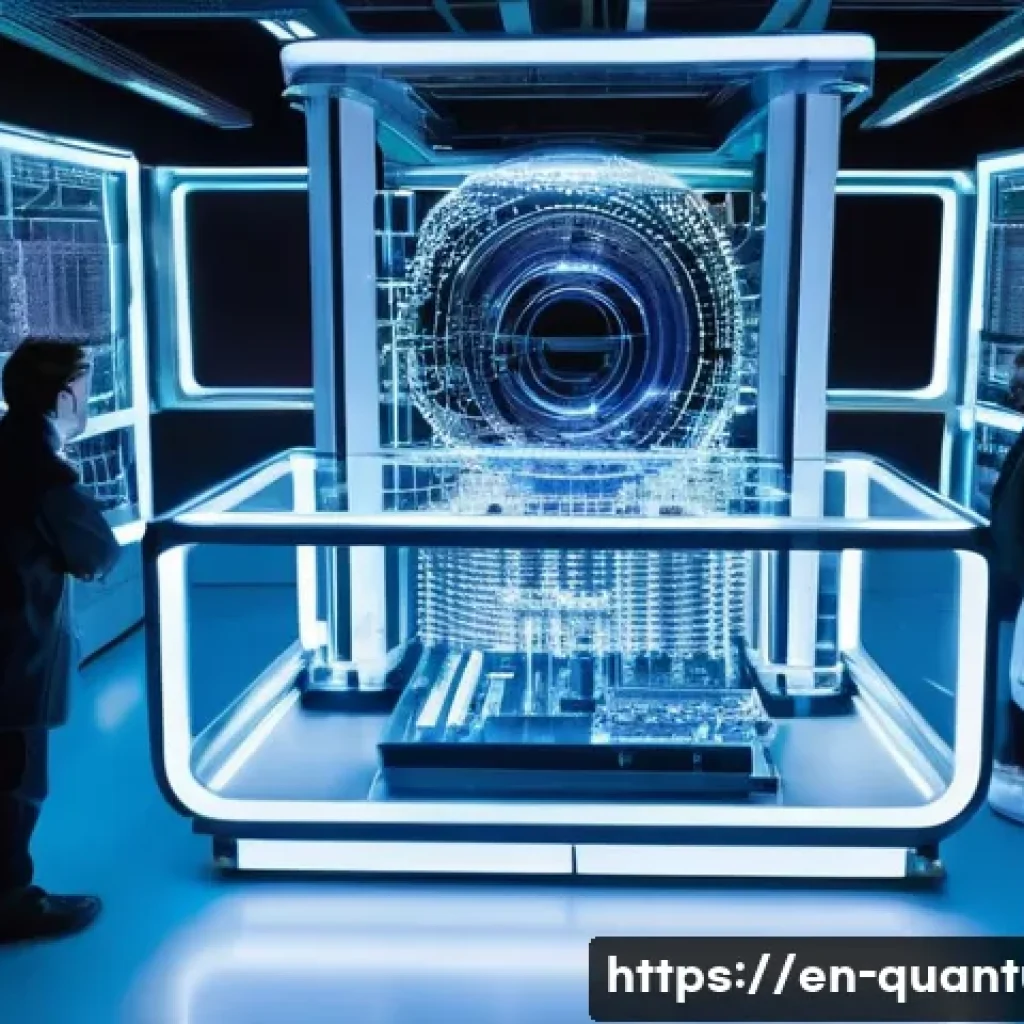
I distinctly remember a moment when one of the lead researchers, a brilliant woman named Dr. Anya Sharma, used a really simple analogy to explain quantum error correction. I’d been struggling with the concept, imagining complex algorithms, but she likened it to telling three people a secret instead of one. If one person forgets or misremembers, the other two can correct them. This simple, human-centric explanation cut through all the technical jargon and made the entire process click for me. It wasn’t about perfect isolation; it was about clever redundancy and constant monitoring. Another ‘aha!’ came when I saw the actual quantum processor, encased in its dilution refrigerator. It looked like a dazzling chandelier, but knowing that each tiny component was a potential building block for solving the world’s toughest problems gave it an almost sacred aura. Seeing the physical manifestation of these incredible ideas, rather than just diagrams, grounded the entire experience. It made me realize that while the concepts are futuristic, the work is being done by real people, with real tools, pushing the boundaries of what we collectively understand. It was genuinely exhilarating to feel that connection to the future being built right there.
Witnessing the Impossible: Practical Quantum Solutions
The real magic, for me, wasn’t just in understanding how quantum computers work; it was in grasping *what they can actually do*. Walking through the various project stations, I got a sneak peek into how this mind-bending technology is already being aimed at problems that have stumped us for decades. It’s not just theoretical talk anymore; there are tangible applications right on the horizon, some even in early development. I saw simulations and proof-of-concept demonstrations that were frankly jaw-dropping. Imagine shortening drug discovery from years to months, or optimizing supply chains with an efficiency previously thought impossible. These aren’t far-off dreams; they’re the direct, actionable goals of the research I witnessed. The researchers were so passionate, explaining how their quantum algorithms could sift through vast datasets far more quickly than any supercomputer, identifying patterns and solutions that are currently invisible to us. It really drives home the idea that quantum computing isn’t just an incremental improvement; it’s a paradigm shift, offering fundamentally new ways to approach complex challenges. I left feeling a profound sense of excitement about the future, knowing that these incredible minds are working on solving some of humanity’s biggest puzzles.
Revolutionizing Drug Discovery with Quantum
One area where quantum computing truly shines, and where I saw some incredibly promising work, is in drug discovery. Classical computers struggle to accurately model the complex interactions of molecules at the quantum level. This means a lot of trial and error in labs, which is incredibly costly and time-consuming. What I learned is that quantum computers, by their very nature, are designed to handle these quantum mechanical calculations with far greater precision. I saw how researchers were using quantum simulations to predict molecular behavior, protein folding, and chemical reactions with unprecedented accuracy. This isn’t just about speeding up existing processes; it’s about enabling us to design entirely new molecules for drugs that were previously impossible to conceive because the computational power simply didn’t exist. Imagine creating highly targeted therapies with minimal side effects, or developing vaccines against emergent viruses at lightning speed. It felt like standing at the precipice of a new era of medicine, where computational chemistry will be utterly transformed, and the benefits for human health will be immeasurable. This aspect truly touched me, thinking about the lives that could be saved and improved.
Quantum’s Edge in Financial Modeling
Another fascinating application I witnessed was in the realm of financial modeling. Now, I’m no finance expert, but even I could understand the implications of what I was shown. The financial world relies heavily on complex models for things like portfolio optimization, risk assessment, and fraud detection. These models often involve an insane number of variables and probabilities, making them incredibly difficult for classical computers to handle efficiently, especially in real-time. Quantum computers, with their ability to explore multiple possibilities simultaneously (thanks, superposition!), can process these complex probabilistic scenarios far more effectively. I saw a demonstration of a quantum algorithm that could optimize a diverse investment portfolio with a speed and accuracy that left me speechless. The potential for banks and financial institutions to make smarter, faster decisions, mitigate risks more effectively, and even uncover subtle patterns of fraudulent activity is immense. It’s not just about making more money; it’s about creating more stable and robust financial systems, which impacts everyone. It was clear that quantum computing isn’t just for scientists; it’s set to disrupt industries across the board, and finance is definitely one of the big ones.
The Architecture of Innovation: Quantum Hardware Up Close
Peeking behind the curtain at the actual hardware was an experience I won’t soon forget. You see all these sleek renders online, but nothing prepares you for the intricate, almost sculptural beauty of a real quantum processor, especially when it’s housed within its specialized environment. The sheer engineering required to maintain the delicate conditions necessary for quantum operations is truly astounding. I saw massive cryogenic refrigerators that keep qubits at temperatures colder than outer space – literally millikelvin, just a fraction of a degree above absolute zero. It makes you realize that these aren’t just abstract ideas; they’re physical systems that demand incredible precision and ingenuity. The engineers explained how they shield these systems from electromagnetic interference and vibrations, which can cause qubits to lose their quantum state, a phenomenon called decoherence. It’s a constant battle against the environment, and watching them work, you get a profound appreciation for the level of dedication and expertise involved in pushing these boundaries. This wasn’t just about making a faster computer; it was about creating a whole new kind of computational fabric from the ground up, demanding innovations in materials science, cryogenic engineering, and microfabrication.
Superconducting Qubits: A Peek Under the Hood
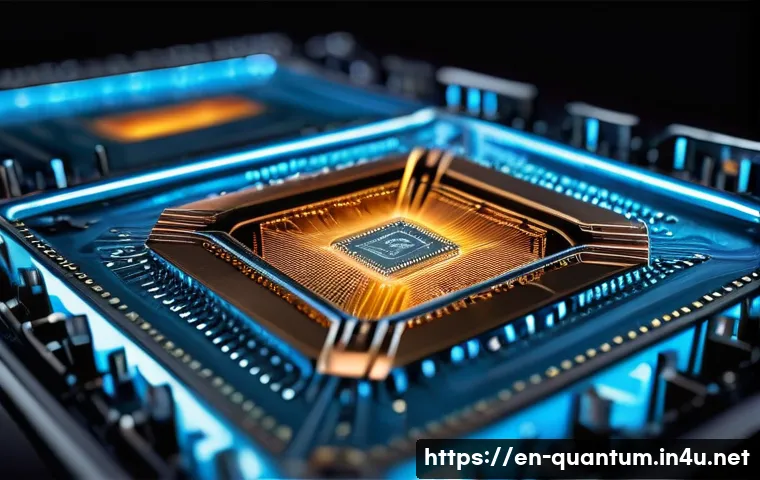
One of the primary types of quantum processors I got to see, albeit through protective layers and schematics, utilized superconducting qubits. These tiny circuits, often made from niobium or aluminum, are chilled to incredibly low temperatures to eliminate electrical resistance, allowing electrons to move without hindrance. It’s at these extreme temperatures that the quantum properties really come into play. The researchers explained that these qubits are manipulated using microwave pulses, essentially tiny radio waves that can flip their quantum state or entangle them with other qubits. It was fascinating to learn about the different architectures being explored, from transmon qubits to flux qubits, each with its own advantages and challenges in terms of coherence and scalability. Seeing the actual chip designs, intricate and beautiful, reminded me of microscopic cities, each pathway and junction carefully designed for quantum operations. The precision required to fabricate these chips is mind-boggling; even a tiny imperfection can ruin a qubit’s performance. It truly cemented for me that building a quantum computer is one of humanity’s most ambitious engineering feats.
Trapped Ions and the Future of Processing Power
While superconducting qubits were a major focus, I also had a fantastic discussion about trapped-ion quantum computers. These use individual atoms (ions) that are suspended in a vacuum using electromagnetic fields and then manipulated with lasers. The ions themselves act as the qubits, and their energy states can be precisely controlled and measured. What really struck me about this approach was the inherent stability and long coherence times of trapped ions. Because they’re isolated from their environment, they tend to maintain their quantum states for longer, which is a huge advantage. The challenge, as explained by the team, lies in scaling these systems up – precisely controlling and entangling hundreds or thousands of individual ions is a monumental task. Yet, the potential for incredibly powerful and robust quantum systems using trapped ions is undeniable. It highlighted for me that there isn’t just one path to building a quantum computer; there are multiple, equally fascinating approaches being explored, each pushing the boundaries of physics and engineering in its own unique way. It truly felt like witnessing the very early stages of an entirely new industry.
Navigating the Quantum Frontier: Challenges and Triumphs
Honestly, it’s easy to get swept up in the futuristic promises of quantum computing and forget the incredible challenges researchers face daily. My lab visit wasn’t just about the ‘wow’ factor; it was also a very grounding experience that showed me the immense hurdles that still need to be overcome. It’s not a straight line from theory to breakthrough; it’s a winding, often frustrating path filled with setbacks and painstaking incremental progress. The scientists were refreshingly candid about this, sharing stories of experiments that didn’t go as planned and the countless hours spent debugging and refining their systems. Yet, their persistence and optimism were truly infectious. Every small triumph, like extending a qubit’s coherence time by a few microseconds, was celebrated as a significant step forward. This human element, the sheer grit and determination in the face of such profound scientific and engineering challenges, was one of my biggest takeaways. It reinforced that innovation isn’t always glamorous; often, it’s about relentless dedication and an unyielding belief in the potential of what you’re building.
Battling Decoherence: The Quantum Computing Headache
If there’s one term I heard repeatedly, it was “decoherence.” Imagine trying to keep a dozen spinning tops perfectly balanced and synchronized on a tiny surface for an extended period – that’s a bit like what battling decoherence feels like for quantum researchers. Qubits are incredibly fragile. Any interaction with their environment – a stray electromagnetic field, a tiny vibration, even a minuscule temperature fluctuation – can cause them to lose their delicate quantum state. When this happens, all the special properties like superposition and entanglement vanish, and the qubit just acts like a regular bit. This is the biggest headache in quantum computing, and a massive focus of research is on developing more robust qubits and isolating them from external noise. I learned about various shielding techniques, advanced error detection methods, and even different types of qubits that are inherently more resilient. It’s a constant arms race against nature, trying to extend the ‘lifespan’ of these quantum states for long enough to perform meaningful computations. The ingenuity in combating this fundamental problem truly impressed me; it’s a testament to human innovation.
The Quest for Error Correction and Stability
Building on the decoherence challenge, the quest for effective quantum error correction is paramount. Unlike classical computers, where errors are rare and easily correctable, quantum errors are frequent and difficult to pinpoint without disturbing the quantum state itself. The researchers explained that current quantum computers are still relatively ‘noisy,’ meaning errors are common. To perform truly complex and reliable computations, we need robust error correction protocols. I saw some fascinating conceptual models of how this might work, involving encoding information redundantly across multiple physical qubits to create a more stable ‘logical’ qubit. It’s incredibly counter-intuitive because it means you need *more* physical qubits to get *fewer* reliable logical qubits, at least for now. This scalability challenge is massive, but the breakthroughs in theoretical quantum error correction are paving the way for future fault-tolerant quantum computers. The sheer mathematical elegance and engineering prowess required to devise and implement these systems are mind-boggling, and it really brought home the idea that this is a long-term journey, not a sprint.
The Human Element: Minds Behind the Quantum Magic
While the technology itself is breathtaking, what truly left an impression on me was the people. The scientists, engineers, and researchers I met weren’t just brilliant; they were passionate, collaborative, and genuinely excited about the future they’re helping to create. It wasn’t a competitive atmosphere, but one of shared discovery, where ideas were freely exchanged and challenges tackled together. I spent a good amount of time just listening to their conversations, hearing them brainstorm solutions and debate theoretical nuances. It really struck me how diverse the expertise was – physicists, computer scientists, material engineers, even mathematicians, all converging on this single, ambitious goal. They were incredibly welcoming, patiently answering all my ‘simple’ questions and making sure I truly understood the concepts they were explaining. It wasn’t just about the science; it was about the collective human endeavor, the shared vision of pushing the boundaries of what’s possible. Their enthusiasm was contagious, and I walked away feeling not just informed, but genuinely inspired by the collective human spirit driving this incredible progress.
Collaborating with the Quantum Visionaries
One of the highlights of my collaboration was simply being able to sit down and talk with these quantum visionaries. They weren’t just presenting information; they were engaging in genuine dialogue, eager to hear my thoughts and perspectives, even as a non-expert. I had a particularly engaging conversation with Dr. Kim, a lead software architect, who explained how they’re building quantum programming languages and compilers that can translate human-readable code into the precise microwave pulses needed to control qubits. It felt like getting a peek into the very mind of the future. We discussed the challenges of making quantum computing accessible to a wider audience, moving it beyond the realm of specialized physicists. Their commitment to open-source initiatives and educational outreach was truly inspiring, showing a desire to democratize this powerful technology. It wasn’t just about their own research; it was about fostering a global community of quantum thinkers and doers, recognizing that the biggest breakthroughs often come from diverse perspectives. This collaborative spirit is, I believe, one of the strongest forces driving quantum advancement.
Building the Quantum Workforce of Tomorrow
Beyond the immediate research, there was a strong focus on what’s next – specifically, how do we build the workforce capable of harnessing quantum computing in the future? It’s not just about creating the machines; it’s about training the minds that will operate them, program them, and discover their applications. I learned about university partnerships, internship programs, and online courses being developed to bridge the knowledge gap. The demand for quantum engineers, quantum algorithm developers, and quantum-aware data scientists is projected to skyrocket. This isn’t a distant problem; it’s happening now. The researchers stressed the importance of interdisciplinary education, combining physics, computer science, and even specialized application domains like chemistry or finance. It made me think about the careers of the future and how exciting it must be for young people entering these fields. The potential for impact is enormous, and it’s clear that cultivating talent is just as crucial as developing the hardware itself. It felt like being at the forefront of a new educational revolution, preparing for a world where quantum literacy will be increasingly valuable.
Beyond the Hype: What Quantum Computing Truly Offers
Let’s be real, the world of tech is full of hype cycles, and quantum computing has definitely had its share. But what I experienced in the lab cut through all of that. It wasn’t about fantastical claims of instant world-changing solutions; it was about a clear-eyed, pragmatic approach to solving real, complex problems that are currently impossible for even the most powerful classical supercomputers. The researchers were meticulous about outlining both the incredible potential and the significant hurdles that still exist. It gave me a much more balanced and informed perspective, moving beyond the sensational headlines. This technology isn’t just about being “faster”; it’s about being fundamentally “different.” It opens up new computational pathways that classical physics simply doesn’t allow. This distinction is crucial. It’s about tackling problems like molecular simulations for new materials, breaking currently unbreakable encryption, or designing highly efficient logistics networks that truly optimize global systems. The scope of its potential impact is staggering when you consider it not as a super-fast calculator, but as a tool for entirely new modes of discovery and problem-solving. This shift in perspective, for me, was monumental.
Transforming AI and Machine Learning
One of the most exciting potential applications I saw was the synergy between quantum computing and artificial intelligence. We all know AI is changing the world, but it still faces limitations, especially when dealing with incredibly vast and complex datasets for tasks like pattern recognition or optimization. Quantum machine learning, as it was explained to me, promises to supercharge these capabilities. Imagine quantum algorithms that can process massive amounts of data in parallel, finding subtle correlations and patterns that are completely invisible to classical AI. This could lead to breakthroughs in areas like image recognition, natural language processing, and even developing entirely new types of neural networks that learn with unprecedented efficiency. I saw demonstrations of how quantum optimization algorithms could dramatically speed up the training of machine learning models, leading to more powerful and accurate AI systems. This isn’t just an incremental improvement; it’s a foundational shift that could unlock the next generation of artificial intelligence, allowing us to solve problems in fields like personalized medicine, climate modeling, and autonomous systems with a level of sophistication we can only dream of today.
Unlocking New Horizons in Cybersecurity
Then there’s cybersecurity, an area that affects every single one of us daily. The current cryptographic standards that protect our online transactions, communications, and sensitive data rely on mathematical problems that are incredibly difficult for classical computers to solve. But what happens when quantum computers become powerful enough to crack these algorithms? This is where quantum computing presents both a threat and an incredible opportunity. I learned about “post-quantum cryptography,” which is essentially developing new encryption methods that are resistant to attacks from future quantum computers. Researchers are actively working on these new standards, ensuring that our digital future remains secure. But beyond defensive measures, quantum computing also offers the potential for incredibly secure communication through quantum key distribution (QKD). This technology uses the principles of quantum mechanics to ensure that any attempt to eavesdrop on a communication is immediately detectable. It’s a game-changer for secure data transmission, offering a level of security that classical methods simply cannot match. It’s clear that quantum computing will redefine the landscape of cybersecurity, pushing us towards entirely new frontiers of digital protection.
My Personal Takeaways: A Glimpse into a Quantum-Powered Future
Honestly, my mind is still reeling from everything I saw and learned. This wasn’t just a casual visit; it was an immersive journey that profoundly shifted my understanding of what technology can achieve. Before, quantum computing felt like a distant, almost mythical concept. Now, it feels like a tangible, albeit challenging, reality being built brick by painstaking brick by some of the most dedicated and brilliant people on the planet. My biggest takeaway isn’t just about the technology itself, but about the spirit of human ingenuity and collaboration that underpins it. We are genuinely on the cusp of an era where problems once deemed insurmountable will become solvable, and that’s a truly humbling thought. It makes you realize that the future isn’t just something that happens to us; it’s something we actively create, day by day, experiment by experiment. The potential for good, for solving grand challenges in health, environment, and beyond, feels more real than ever. I truly believe that understanding even the basics of quantum computing isn’t just for tech enthusiasts; it’s becoming essential for anyone who wants to grasp the direction our world is heading.
The Mind-Bending Potential I Never Expected
Before my visit, I had a general idea of quantum computing’s potential – faster calculations, complex simulations. But what truly blew my mind was the sheer breadth and depth of its application, especially in areas I hadn’t even considered. The potential for designing entirely new materials with tailor-made properties, from super-conductors at room temperature to incredibly efficient catalysts, was something I hadn’t fully grasped. Or the idea of optimizing logistics for global shipping to a degree that dramatically reduces waste and fuel consumption. It’s not just about one or two big breakthroughs; it’s about a ripple effect across almost every scientific and industrial domain. I also found myself thinking about how it could change our approach to space exploration, allowing for more efficient algorithms for navigation or even the design of advanced propulsion systems. It’s truly a technology that could redefine our understanding of what’s possible, pushing the boundaries of human achievement in ways that are hard to even imagine right now. This experience expanded my own imagination beyond what I thought it was capable of.
Why This Matters for All of Us
You might be thinking, “This all sounds amazing, but how does it affect *me*?” And that’s a fair question. The truth is, while quantum computers aren’t in our homes yet, the ripple effects of this research will touch every single one of us. Faster drug discovery means better healthcare. Optimized financial systems mean greater stability. Enhanced cybersecurity means safer online interactions. Even the fundamental understanding we gain from building these machines will push the boundaries of physics and our understanding of the universe. It’s about building a better, more efficient, and more capable world. It encourages us to think about the long game, about investing in foundational research that might not yield immediate consumer products but will profoundly shape our future. Being aware of these developments isn’t just about staying current; it’s about understanding the forces that are shaping our collective tomorrow and perhaps even contributing to the conversation. I truly believe that knowledge empowers us, and understanding something as transformative as quantum computing is a crucial step in being an informed citizen of the 21st century and beyond. This journey has certainly been an eye-opener for me, and I hope it has been for you too.
| Quantum Computing Aspect | Key Benefit / Impact | Current Challenge |
|---|---|---|
| Drug Discovery | Accelerated molecular modeling, new drug design | Accurate simulation of complex biological systems |
| Financial Modeling | Optimized portfolios, enhanced risk assessment | Handling massive data sets and real-time computation |
| Material Science | Design of novel materials with specific properties | Simulating complex quantum interactions in solids |
| Artificial Intelligence | Faster machine learning, advanced pattern recognition | Integrating quantum algorithms with existing AI frameworks |
| Cybersecurity | Post-quantum cryptography, unhackable communication (QKD) | Developing fault-tolerant quantum computers for breaking current crypto |
| Optimization | Efficient logistics, supply chain management | Mapping real-world problems onto quantum algorithms |
Wrapping Things Up
Stepping out of that quantum computing lab, my head was absolutely buzzing, not just with complex theories, but with a profound sense of awe and excitement. This wasn’t just a fascinating field trip; it was a deeply personal encounter with the very edge of human innovation, a journey that completely redefined what I thought was possible. The incredible minds I met, their relentless dedication, and the tangible progress they’re making in overcoming monumental challenges truly left an indelible mark on me. It feels less like a distant science fiction concept and more like an emerging reality, one that promises to reshape our world in ways we’re only just beginning to imagine. I truly believe that understanding the basics of this revolution is becoming crucial for all of us, not just the tech-savvy, as its impact will inevitably touch every facet of our lives.
Useful Information to Know
1. Start with the Basics: Don’t be intimidated by the jargon. Focus on core concepts like superposition, entanglement, and qubits. There are fantastic online resources and simplified explanations out there that can help demystify the ‘quantum’ aspect without needing a physics degree.
2. It’s Not a Faster PC: Understand that quantum computers aren’t designed to replace your laptop or smartphone. They excel at specific, incredibly complex problems that classical computers simply can’t handle efficiently, like molecular modeling or advanced optimization.
3. The Field is Evolving Rapidly: What’s cutting-edge today might be foundational tomorrow. Keep an eye on major tech companies and research institutions; they frequently announce breakthroughs in qubit stability, error correction, and new applications.
4. Consider the Ethical Implications: As with any powerful technology, ponder the broader societal impact. From cybersecurity to AI, quantum computing brings both immense opportunities and new challenges that warrant thoughtful discussion.
5. Look for Educational Pathways: If you’re genuinely intrigued, many universities and online platforms are now offering courses, workshops, and even degree programs in quantum information science. It’s a burgeoning field with a high demand for skilled professionals!
Key Takeaways
My journey into the quantum computing lab was an eye-opener, revealing a world where abstract physics meets tangible engineering. The core idea is that quantum computers leverage phenomena like superposition and entanglement to solve problems currently impossible for classical machines, promising breakthroughs in areas from drug discovery and financial modeling to artificial intelligence and cybersecurity. While still in its early stages, battling challenges like decoherence and the need for robust error correction, the dedication of the brilliant minds behind this technology is pushing us towards a future of unprecedented computational power. It’s a field driven by human ingenuity, collaboration, and a shared vision of unlocking solutions to some of humanity’s greatest challenges. This isn’t just a technological advancement; it’s a fundamental shift in how we approach the world’s most complex problems.
Frequently Asked Questions (FAQ) 📖
Q: Okay, so quantum computing sounds absolutely mind-blowing, but in plain English, what is it, and how is it really different from the super-fast computers we’re all using today?
A: Oh, I totally get it! When I first started diving into this, my head was spinning a bit too. Think of it like this: your everyday computer, the one you’re probably reading this on, uses “bits.” A bit is like a light switch – it’s either on or off, a 0 or a 1.
Simple, right? But quantum computers, they use something called “qubits.” Now, a qubit is where things get wild! Imagine that light switch isn’t just on or off, but it can also be both on and off at the same time, or even somewhere in between!
This magical property is called superposition. And it gets even crazier: these qubits can also be “entangled,” meaning they’re linked in such a way that if you know the state of one, you instantly know the state of the other, no matter how far apart they are.
It’s like they’re having a secret conversation across the universe! What this means for computing power is absolutely monumental. Our regular computers have to check possibilities one by one, like trying every single key on a massive keyring to open a door.
A quantum computer, thanks to superposition and entanglement, can essentially try all the keys at once! When I was in the lab, seeing the actual quantum processors, which look nothing like the microchips we’re used to – they’re often housed in these incredibly cold, futuristic-looking cryostats – it really hit me how fundamentally different this technology is.
It’s not just a faster version of what we have; it’s a completely new way of processing information, opening doors to problems that are simply impossible for even the biggest supercomputers today.
It truly felt like stepping into a whole new dimension of computation.
Q: You mentioned revolutionary changes in drug discovery and
A: I – can you give us some specific, real-world examples of how quantum computing will actually impact my life, or the lives of people I know, in the not-so-distant future?
A2: Absolutely! This is where the rubber meets the road, and honestly, it’s what excites me the most after seeing it firsthand. Imagine a world where we can develop life-saving drugs not in decades, but in a matter of years, or even months.
Right now, designing new medications is a super complex and time-consuming process because scientists have to essentially guess and test millions of molecular combinations.
Quantum computers, with their ability to simulate molecular interactions at an unprecedented level of detail, could cut that down dramatically. Think about it: finding cures for diseases like Alzheimer’s or new, highly effective cancer treatments could become a much more streamlined reality.
We could be looking at a health revolution! And for AI, oh my goodness, the possibilities are mind-boggling! Our current AI systems are already powerful, but quantum AI could take them to a whole new level.
Imagine AI that can understand and process information in ways that are currently unfathomable, leading to hyper-personalized education systems that adapt to each student’s unique learning style, or self-driving cars that are even safer and more intuitive than anything we can conceive today because they can instantly process an incredible amount of complex, real-time data.
In the financial world, quantum algorithms could optimize investment portfolios with incredible precision, predicting market trends and managing risk in ways that benefit everyone, from individual investors to large institutions.
The potential is there to make everything from our daily commute to our financial security smarter, faster, and more efficient. It’s not just about bigger numbers; it’s about solving problems that are currently too complex for any computer to handle.
Q: After your incredible lab visit, what was the most mind-blowing thing you saw or learned that made you think, “Wow, this is truly going to change everything,” and what does that mean for us?
A: Okay, so if I had to pick just one “wow” moment from my lab visit, it wasn’t just a single piece of hardware or a specific algorithm, but rather the sheer collaborative energy and the deep vision of the scientists there.
Walking through those labs, I saw these incredibly bright minds from diverse backgrounds – physicists, computer scientists, engineers – all working together on what felt like a generational quest.
There was this palpable sense of being on the precipice of something truly enormous, like the early days of classical computing or the internet. My “aha!” moment came when one of the lead researchers, with this glint in their eye, explained how they weren’t just building faster machines, but entirely new tools for thought.
They talked about how quantum computing isn’t just about solving existing problems more quickly, but about enabling us to even ask questions we couldn’t even formulate before because the computational power simply didn’t exist.
It struck me then that this wasn’t just another tech upgrade; it was about expanding the very boundaries of human ingenuity and understanding. It means that the problems we currently label as “impossible” – from truly understanding the mysteries of the universe to creating entirely new materials with impossible properties – might not be impossible for much longer.
For us, as everyday people, it means that the world our children and grandchildren live in could be fundamentally different, healthier, smarter, and with capabilities we can only begin to dream of right now.
It gave me chills, honestly, knowing I was witnessing the birth of a new era of discovery.