Hey everyone! Ever feel like technology is moving at light speed these days? Just when you think you’ve got a handle on the latest gadget, something even more mind-blowing emerges.
Well, buckle up, because today we’re diving into two of the most transformative innovations shaping our immediate future: 5G and Quantum Computing. I remember when dial-up was a luxury, and now we’re talking about networks so fast they feel almost telepathic, completely changing how we interact with our smart devices, from streaming movies in a blink to powering entire smart cities.
But that’s just the tip of the iceberg! Imagine computing power so immense it could solve problems that currently stump even our most powerful supercomputers, revolutionizing everything from drug discovery to artificial intelligence.
It’s truly a thrilling time to be alive, witnessing the dawn of what feels like a new technological era. I’ve been doing a deep dive into how these two giants are not just evolving independently, but also how they might intertwine to create a future we can barely comprehend.
It’s not science fiction anymore; it’s happening right now, right before our eyes. If you’re as fascinated as I am by how our world is about to get a major upgrade, trust me, you’ll want to stick around.
So, if you’re ready to peek into the future and understand these game-changing technologies, let’s dive right in and explore how they’re set to transform our lives.
The Unseen Powerhouse: How 5G Is Reshaping Our Daily Grind

From Buffering Nightmares to Instant Everything
Honestly, who remembers the days of painfully slow internet, waiting what felt like an eternity for a webpage to load or a video to start? I certainly do! It wasn’t that long ago, and now, 5G is here, silently working its magic in the background, transforming how we live, work, and play. It’s more than just faster downloads; it’s about a fundamental shift in connectivity. When I first got my 5G phone, I wasn’t just impressed by the speed; I was blown away by the lack of lag. It’s like the internet finally caught up to our impatience! Imagine streaming a 4K movie on your phone while commuting, with absolutely zero hiccups, or downloading a massive game update in mere minutes. That’s the everyday reality 5G is bringing to more and more people. It’s not just for tech enthusiasts anymore; it’s becoming the backbone of our digital lives, ensuring everything from video calls to online gaming feels incredibly smooth and responsive. And let me tell you, once you experience it, there’s no going back. I found myself thinking, “How did I ever live without this?” This consistent, reliable connection makes every online interaction feel effortless, truly elevating our digital experience.
Smart Cities and Autonomous Dreams
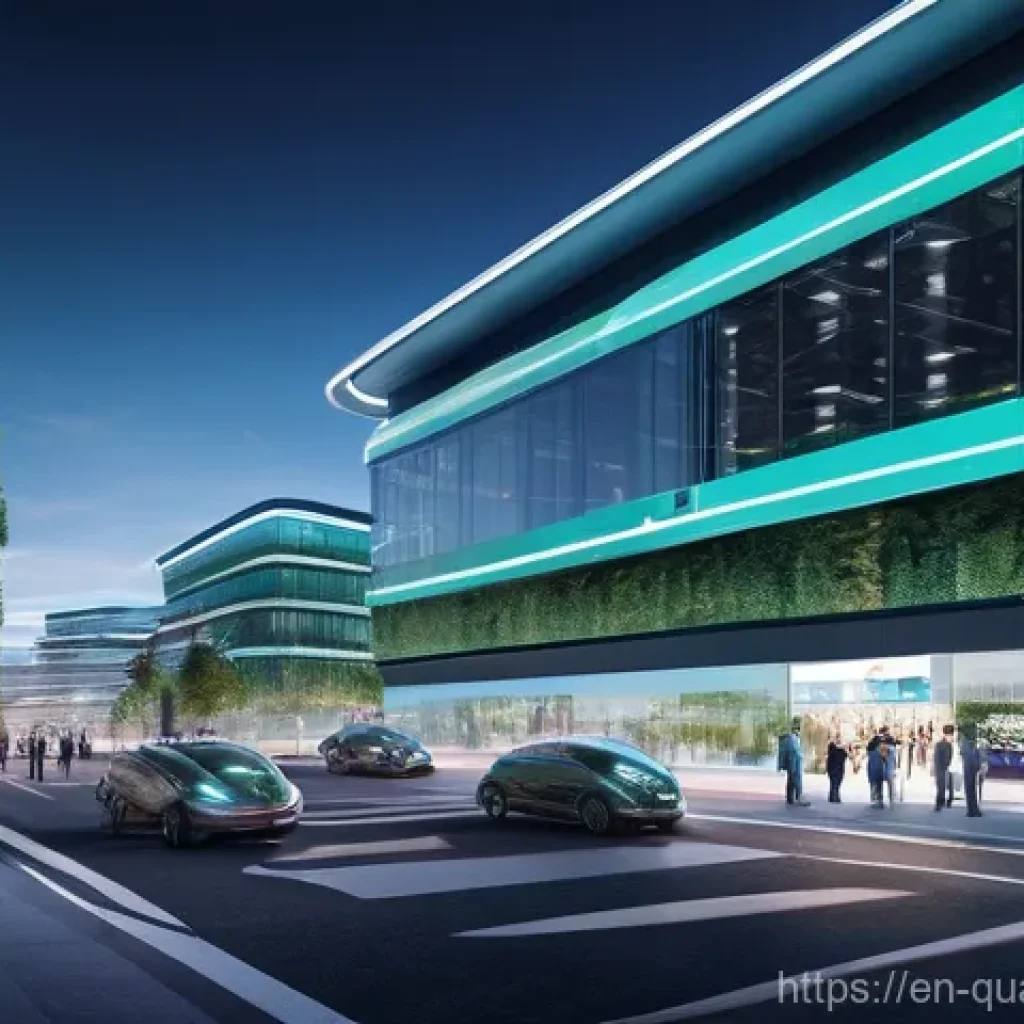
But the real game-changer isn’t just in our pockets. 5G is the invisible thread weaving together the fabric of smart cities. Think about it: traffic lights that adapt to real-time flow, waste management systems that optimize routes, and even public safety applications that can respond with unprecedented speed. This isn’t just futuristic concept art; it’s happening in various pilot programs right now across the globe. I’ve been following some of the trials in cities, and the potential is astounding. Imagine autonomous vehicles communicating seamlessly with each other and with infrastructure, reducing accidents and making commutes a breeze. The low latency of 5G means these vehicles can react almost instantaneously to changes on the road, creating a much safer environment for everyone. For us regular folks, this translates to less time stuck in traffic, more efficient public services, and ultimately, a smoother urban experience. It’s truly exciting to think about how our communities could evolve with this foundational technology in place, making our cities smarter, more sustainable, and ultimately, more livable for everyone.
Beyond Blazing Speeds: What 5G Really Means for Innovation
Unlocking the Internet of Things (IoT) Revolution
When we talk about 5G, it’s easy to get fixated on download speeds, but honestly, that’s just scratching the surface. For me, one of the most exciting aspects is how it’s truly going to unleash the full potential of the Internet of Things (IoT). We’ve heard about smart homes for years, right? Lights, thermostats, security cameras all connected. But with 5G, that connection becomes so robust and reliable that the possibilities explode. We’re talking about billions of devices, from tiny sensors in agricultural fields monitoring soil moisture to massive industrial machinery sharing real-time performance data, all communicating without a hitch. I recently visited a smart factory demo, and it was incredible to see how 5G was enabling robots to work collaboratively with pinpoint accuracy, minimizing errors and maximizing output. This isn’t just about convenience; it’s about creating entirely new efficiencies and revenue streams for businesses, and for us consumers, it means more integrated, intelligent services that truly anticipate our needs. It feels like we’re finally moving past the ‘early adopter’ phase of IoT and into a future where everything truly is connected, reliably and intelligently, making our environments more responsive than ever before.
New Frontiers in Healthcare and Entertainment
The implications of 5G extend into realms that truly touch our lives, like healthcare. Imagine remote surgeries where a specialist can operate on a patient miles away with virtually no delay, thanks to 5G’s ultra-low latency. Or smart wearables that constantly monitor vital signs and alert doctors to potential issues before they become critical. This isn’t just about convenience; it’s about saving lives and improving quality of care. I’ve read about experimental programs using 5G to deliver augmented reality (AR) instructions to paramedics on-site, providing expert guidance in critical moments, potentially revolutionizing emergency response. On the lighter side, think about entertainment. Virtual reality (VR) and augmented reality (AR) experiences that are so immersive and seamless, they feel completely real. No more motion sickness from lag, just pure, unadulterated escapism or incredibly effective training simulations. My kids are already obsessed with AR games, and I can only imagine how much more incredible those experiences will become when powered by 5G, blending the digital and physical worlds in ways we’re only just beginning to grasp, offering unprecedented levels of engagement and interaction.
Stepping into the Quantum Realm: A Glimpse at Mind-Boggling Potential
Beyond Bits and Bytes: The Quantum Difference
Okay, so we’ve talked about 5G, which is amazing, but now let’s shift gears to something that feels straight out of a sci-fi novel: quantum computing. If 5G is about making our current digital world faster and more interconnected, quantum computing is about fundamentally changing how we compute. Instead of the simple ‘on’ or ‘off’ (0 or 1) states of traditional bits, quantum computers use ‘qubits’ that can be 0, 1, or both simultaneously – a concept called superposition. And if that wasn’t wild enough, they can also be ‘entangled,’ meaning they’re linked in such a way that measuring one instantly tells you about the other, no matter how far apart they are. Honestly, wrapping my head around it was a challenge, and it still is! But what this means is that quantum computers can process an astronomical amount of information simultaneously, tackling problems that would take even the most powerful supercomputers billions of years to solve. It’s not just a faster processor; it’s a completely different kind of computing, opening doors to possibilities we couldn’t even dream of with classical machines. I sometimes feel like we’re on the cusp of discovering fire for the second time, but for information processing, truly redefining the boundaries of what’s computationally possible.
Solving the Unsolvable: A New Era of Discovery
So, what kind of problems are we talking about here? Imagine trying to simulate the exact behavior of complex molecules to design a new drug with unparalleled precision, without years of trial-and-error in a lab. Or developing new materials with properties we can only speculate about today. That’s the power of quantum computing. I recently read about its potential applications in personalized medicine, where treatments could be tailored to an individual’s unique genetic makeup, leading to breakthroughs in cancer research and beyond. It’s also poised to revolutionize financial modeling, creating more accurate predictions and optimizing investment strategies in ways that are currently impossible. For environmental science, quantum simulations could help us understand climate change patterns with greater clarity or design more efficient renewable energy solutions, contributing to a more sustainable future. The sheer scale of problems it can address is truly staggering, and while it’s still in its early stages, the implications for human progress are immense. It genuinely makes me feel hopeful about the grand challenges humanity faces, knowing there’s a new tool emerging that can help us tackle them with unprecedented analytical depth.
Quantum Leaps: The Industries Set for a Revolution
Pharmaceuticals and Materials Science: Design at the Atomic Level
I’m particularly fascinated by how quantum computing is set to utterly transform fields like pharmaceuticals and materials science. Right now, drug discovery is an incredibly long, expensive, and often frustrating process, relying heavily on trial and error. But with quantum computers, scientists could simulate molecular interactions with unprecedented accuracy, designing new drugs and therapies at an atomic level. Imagine developing a cure for a rare disease in a fraction of the time it currently takes, or creating vaccines with tailored efficacy. Similarly, in materials science, quantum computing could allow us to design entirely new materials with bespoke properties – think superconductors that work at room temperature, super-efficient batteries, or even materials that can self-repair, revolutionizing countless industries from electronics to aerospace. The possibilities are truly mind-bending. I was listening to a podcast recently where a quantum physicist explained how they could potentially engineer materials that absorb carbon dioxide more efficiently, offering a powerful tool in the fight against climate change. It’s not just about incremental improvements; it’s about enabling breakthroughs that were previously confined to the realm of theoretical physics, ushering in an era of intentional design at the most fundamental levels.
Cracking Codes and Securing Our Digital Future
On a more sobering, yet equally impactful note, quantum computing poses a significant challenge – and offers a solution – to cybersecurity. Many of our current encryption methods, which protect everything from our banking transactions to national security secrets, rely on mathematical problems that are incredibly difficult for classical computers to solve. But for a quantum computer, some of these problems would be trivial. This means that a sufficiently powerful quantum computer could, in theory, break much of our current encryption. It’s a bit alarming, I won’t lie. However, the good news is that researchers are already developing “post-quantum cryptography” – new encryption methods designed to be resistant even to quantum attacks. So, while quantum computing could crack old codes, it’s also paving the way for a new generation of unbreakable security. It’s a race, for sure, but one that smart minds are actively engaged in, pushing the boundaries of cryptographic resilience. This dual-edged sword illustrates the profound impact this technology will have on our digital trust and privacy. For me, it highlights the constant need for innovation in security as technology evolves, constantly adapting to new threats and capabilities.
| Feature | 5G (Next-Gen Connectivity) | Quantum Computing (Future-Gen Processing) |
|---|---|---|
| Primary Function | High-speed, low-latency, high-capacity wireless communication. | Solving complex computational problems intractable for classical computers. |
| Key Technology | Millimeter Wave (mmWave), Massive MIMO, Small Cells. | Qubits, Superposition, Entanglement, Quantum Gates. |
| Impact on Daily Life | Faster downloads, seamless streaming, advanced IoT, smart cities, autonomous vehicles. | New drug discoveries, advanced materials, enhanced AI, unbreakable encryption (eventually), financial modeling. |
| Current Status | Widespread deployment and increasing availability globally. | Early-stage development, experimental, limited accessibility, significant research ongoing. |
| Core Challenge | Infrastructure deployment, coverage, security, energy efficiency. | Maintaining quantum coherence, error correction, scalability, manufacturing. |
Bridging the Gap: Where 5G Meets Quantum
Enabling the Quantum Internet
So, we have 5G delivering incredible speed and connectivity, and quantum computing promising mind-boggling processing power. But what happens when these two giants start to work together? This is where things get really exciting for me! One of the most fascinating convergences is the idea of a “quantum internet.” Just as 5G connects our classical devices, future 5G networks, especially with their super-low latency and massive bandwidth, could provide the infrastructure for transmitting quantum information – think entangled qubits across vast distances. This isn’t just about faster internet; it’s about creating an entirely new communication paradigm that’s inherently secure due to the laws of quantum mechanics. Imagine a future where communication is unhackable because any attempt to eavesdrop would instantly break the quantum link, alerting both parties. It feels like something out of a spy movie, but it’s genuinely being researched. This synergy could allow for distributed quantum computing, where multiple quantum processors could work together, or even quantum-enhanced sensing across a wide area. It’s the kind of future that makes my tech-nerd heart sing, envisioning a network that’s not just fast, but fundamentally secure and capable of entirely new computational feats.
Distributed Quantum Processing and Cloud Access
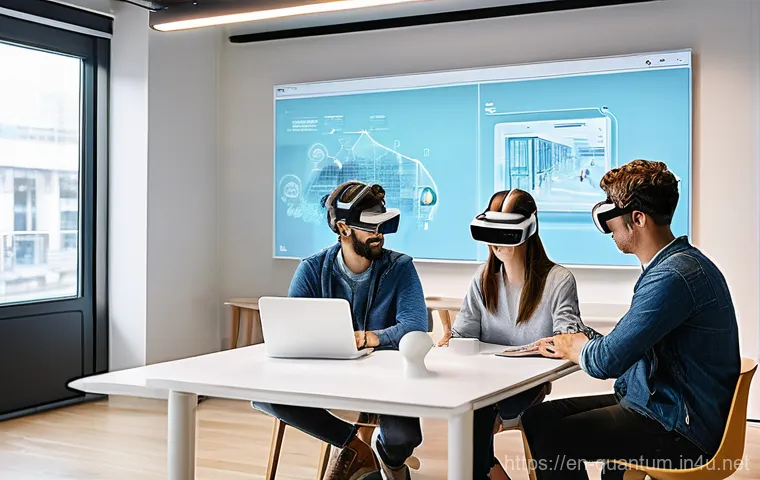
The marriage of 5G and quantum computing isn’t just about theoretical quantum internets; it also has very practical implications for how we access and utilize quantum power. Since quantum computers are incredibly complex and expensive to build and maintain, most users won’t have one in their basement anytime soon. Instead, they’ll likely access quantum computing resources via the cloud, much like we access powerful servers today. This is where 5G comes in. Its ultra-reliable, low-latency connection will be crucial for sending quantum algorithms and receiving results from these distant quantum processors with minimal delay. Imagine a researcher in a university, or a small startup, being able to leverage the power of a state-of-the-art quantum computer located hundreds or thousands of miles away, all thanks to the robust backbone provided by 5G. It’s about democratizing access to this incredible technology. I believe this kind of cloud-based quantum computing, facilitated by 5G, will accelerate discovery and innovation across countless sectors, making it accessible to more brilliant minds worldwide, pushing the boundaries of research and development in an unprecedented way.
Navigating the New Frontier: Challenges and Considerations
The Hurdles for Widespread 5G Adoption
While 5G is fantastic, it’s not without its challenges. One of the biggest hurdles I’ve observed firsthand is the sheer infrastructure required for widespread deployment. Unlike previous generations of cellular tech, 5G, especially the faster millimeter wave (mmWave) frequencies, requires many more smaller cell sites. This means a denser network of antennas, which can be expensive and time-consuming to install. I’ve seen areas where coverage is still spotty, even in major cities, because rolling out this infrastructure takes time and significant investment from carriers. There are also concerns about security, as a more interconnected network presents a larger attack surface, and privacy, given the vast amounts of data being transmitted. And let’s not forget the power consumption; all those new cell sites and connected devices need energy, which raises sustainability questions. It’s a complex dance between innovation, investment, and regulatory frameworks to ensure we can reap the full benefits of 5G without compromising on reliability, security, or environmental impact. From my perspective, it’s a marathon, not a sprint, to truly make 5G ubiquitous and optimal for everyone.
The Delicate Nature of Quantum Systems
Quantum computing, on the other hand, faces an entirely different set of formidable challenges. The core issue lies in the incredibly delicate nature of qubits. They are notoriously fragile and easily disrupted by external noise – things like temperature fluctuations, electromagnetic fields, or even stray vibrations. This “decoherence” causes them to lose their quantum properties, leading to errors. Building and maintaining quantum computers requires extremely precise conditions, often super-cooling them to temperatures colder than deep space. I’ve seen some of the images of these machines, encased in elaborate cryostats, and they look like something out of a secret government lab! Scaling these systems up – meaning adding more qubits while keeping them stable and interconnected – is another massive hurdle. We’re still in the early stages of building fault-tolerant quantum computers, and significant breakthroughs in materials science and engineering are needed. It’s a testament to human ingenuity that we’ve come this far, but there’s a long road ahead before quantum computers become robust, everyday tools. It feels like we’re still perfecting the engine before we can truly drive the car, focusing heavily on fundamental research and engineering challenges.
What This Means for You: Preparing for Tomorrow’s Tech
Adapting Your Digital Lifestyle
So, what does all this mean for us, the everyday users and consumers? Well, for 5G, it means embracing a more connected and efficient digital lifestyle. Your current smartphone probably supports 5G, and as coverage expands, you’ll naturally experience faster speeds and better reliability. But it’s also about thinking beyond just your phone. Consider how smart home devices, wearables, and even your car might integrate more seamlessly into your life. I’ve already noticed how much smoother my smart home devices operate on a 5G home internet connection, making daily tasks much more fluid. It’s about being open to new possibilities, like using AR for shopping or navigation, or even trying out cloud-based gaming services that rely heavily on low latency. For small businesses, it’s about looking at how 5G-enabled IoT can streamline operations, improve customer service, or create new product offerings that were previously unthinkable. It’s not about rushing out to buy every new gadget, but rather understanding how these foundational technologies will slowly but surely change the landscape of our interactions with the digital world. Stay informed, experiment with new services, and enjoy the ride as our world becomes increasingly smart and responsive!
Understanding the Quantum Horizon
Now, when it comes to quantum computing, its impact on our daily lives will be less direct but far-reaching. You won’t be buying a quantum laptop next year, but the breakthroughs it enables will affect everything from the medicines you take to the security of your online transactions. For those of us who are curious, it’s about understanding the fundamental shift in computational power and appreciating its potential. Keeping an eye on developments in areas like AI, drug discovery, and cybersecurity will give you a glimpse into how quantum advancements are filtering down. For students and young professionals, learning about quantum physics or quantum information science could open up incredibly exciting career paths in a nascent but rapidly growing field. I believe that understanding these foundational shifts, even at a high level, empowers us to better navigate the future. It’s about being aware that truly transformative changes are brewing, even if they’re not immediately visible on our screens or in our homes. It’s a thrilling time to be a witness to such profound technological evolution, a moment where the very fabric of computing is being rewritten, promising a future that’s both challenging and incredibly exciting.
Wrapping Things Up
Whew! What a journey we’ve been on, diving deep into the incredible worlds of 5G and quantum computing. It’s truly mind-boggling to consider how these technologies, often working hand-in-hand, are not just enhancing our current digital experiences but actively shaping a future that felt like pure science fiction just a few years ago. From the lightning-fast downloads and seamless streaming we now enjoy thanks to 5G to the profound potential of quantum computing to revolutionize medicine and unlock entirely new materials, it’s clear we’re living through an extraordinary period of innovation. I genuinely believe that understanding these shifts, even at a high level, is crucial for everyone, whether you’re a tech enthusiast like me or just someone curious about what tomorrow holds. It’s about being informed, staying agile, and getting ready to embrace a world that’s becoming smarter, faster, and more connected in ways we’ve only just begun to imagine. It’s an exhilarating time to be alive, isn’t it?
Useful Information to Know
1. Check Your Device’s 5G Bands: Not all 5G is created equal! Make sure your smartphone or device supports the specific 5G bands deployed by your local carrier, especially the faster millimeter-wave (mmWave) bands for truly eye-watering speeds, though these have a shorter range.
2. Explore 5G-Enabled IoT: Keep an eye out for smart home devices, wearables, and even vehicle integrations that leverage 5G’s low latency and high capacity. Many affordable 5G IoT devices are becoming available, enhancing daily tasks and smart living.
3. Understand Post-Quantum Cryptography (PQC): While quantum computers capable of breaking current encryption are still some years away, researchers are actively developing PQC to secure our digital future. Major strides are being made, with the majority of human-initiated traffic with Cloudflare already using post-quantum encryption by October 2025. This is essential for protecting data from future “harvest-now-decrypt-later” attacks.
4. Consider Cloud-Based Quantum Access: Don’t expect a quantum computer in your home, but do anticipate more cloud-based services offering access to quantum computing power. 5G’s reliable, low-latency connection will be vital for sending complex quantum algorithms and receiving results from these distant processors.
5. Stay Informed on 5G-Advanced and 6G: While 5G is still rolling out, 5G-Advanced (3GPP Release 18 and beyond) is enhancing capabilities with AI/ML-driven automation and improved efficiency, acting as a bridge to 6G, which is expected around 2030 and promises even greater speeds and new communication paradigms.
Key Takeaways
The synergy between 5G and quantum computing is setting the stage for an unprecedented technological revolution. 5G is rapidly becoming the digital backbone, delivering ultra-fast, low-latency, and highly reliable connectivity that underpins everything from smart cities and autonomous vehicles to enhanced mobile broadband and the explosion of IoT devices. Its widespread deployment and advanced features like network slicing and AI integration are transforming how we interact with our digital world and boosting efficiencies across industries. Meanwhile, quantum computing, though still in its early experimental stages, promises to fundamentally change problem-solving. It’s poised to unlock breakthroughs in drug discovery, materials science, and AI, tackling problems that are simply intractable for classical computers. While challenges like infrastructure costs for 5G and the delicate nature of qubits for quantum computing remain, the continuous innovation in these fields is undeniable. The convergence of these technologies, particularly in enabling a quantum internet and democratizing access to quantum processing via the cloud, signifies a future that is not just faster, but also more secure and capable of addressing some of humanity’s most complex problems. Adapting to these changes means embracing a more connected digital lifestyle with 5G and understanding the far-reaching, albeit indirect, impacts of quantum advancements on our lives. It’s an exciting era for technology, pushing the boundaries of what’s possible and reshaping our future in profound ways.
Frequently Asked Questions (FAQ) 📖
Q: uantum Computing, are not just evolving independently, but also how they might intertwine to create a future we can barely comprehend. It’s not science fiction anymore; it’s happening right now, right before our eyes. If you’re as fascinated as I am by how our world is about to get a major upgrade, trust me, you’ll want to stick around. So, if you’re ready to peek into the future and understand these game-changing technologies, let’s dive right in and explore how they’re set to transform our lives.Q1: How is 5G actually changing my everyday life right now beyond just making my phone faster?
A: Oh, trust me, 5G is doing so much more than just supercharging your phone downloads – though that’s certainly a nice perk! From what I’ve personally seen and experienced, 5G is quietly laying the groundwork for a truly connected world, making our lives smoother in ways you might not even notice.
For starters, think about your smart home. With 5G’s increased bandwidth and ultra-low latency, you can now connect dozens of devices simultaneously without a hiccup.
I’ve got everything from smart lights and thermostats to a connected coffee maker that starts brewing when my alarm goes off, and 5G keeps it all running seamlessly.
This level of reliability makes smart homes genuinely smart, not just a collection of fancy gadgets. Beyond the home, 5G is reshaping our cities. I’ve been keeping an eye on places like San Antonio, where smart traffic systems powered by 5G have already reduced commute times by an average of 12 minutes daily.
Imagine getting back three full days of your life each year just from smarter traffic management! It’s incredible. For those of us working remotely, 5G is a game-changer, enabling seamless collaboration for bandwidth-intensive tasks like augmented reality training or real-time project work with virtually zero latency, no matter where you are.
And in healthcare, it’s enabling things we only dreamed of a few years ago: remote surgeries, live diagnostics from ambulances, and wearables that track vitals in real-time, proactively alerting doctors.
It’s truly making a tangible difference in safety, efficiency, and convenience, making the future feel very present.
Q: Is quantum computing something I need to worry about now, or is it still way off in the distant future? What are its immediate implications?
A: That’s a fantastic question, and one I get asked a lot! From my perspective, while large-scale, fault-tolerant quantum computers are still some years away (think 2030-2040 for broad commercial applications), quantum computing isn’t just a distant dream anymore; it’s already making waves, and you should definitely be aware of its immediate implications.
Right now, in 2025, we’re seeing significant breakthroughs in logical qubits and error correction, with companies like Microsoft and Quantinuum demonstrating impressive error reductions.
This means we’re moving from purely theoretical to tangible, albeit early, applications. For instance, quantum annealers are already tackling real-world optimization problems commercially.
Volkswagen, for example, has used D-Wave systems to optimize traffic flow, and telecom companies are applying it to network configuration. That’s right, real businesses are already using quantum-inspired solutions to be more efficient!
The most pressing immediate implication for many is cybersecurity. While fully capable quantum computers that can break current encryption are still down the road, hackers are already “harvesting now, decrypting later” – storing sensitive encrypted data with the expectation of decrypting it once quantum computers are powerful enough.
This has led to a major push for Post-Quantum Cryptography (PQC), with NIST finalizing new quantum-resistant algorithms for standardization. Google Chrome has even started pilot deployments of hybrid encryption.
So, while you won’t be buying a quantum computer for your home anytime soon, its impact on how our data is secured (or potentially unsecured) is very much a “now” conversation for businesses and governments.
The revolution is quietly underway, impacting industries like finance, healthcare, and logistics by solving complex optimization problems, accelerating drug discovery, and improving AI.
Q: How do 5G and Quantum Computing relate to each other?
A: re they separate technologies, or will they work together? A3: I love this question because it hits on the true magic of where technology is headed: synergy!
At first glance, 5G and quantum computing might seem like entirely separate beasts – one focuses on lightning-fast, ubiquitous connectivity, and the other on mind-bending computational power.
However, from what I’ve been researching, they are absolutely destined to intertwine, creating an even more powerful technological ecosystem. Think of it this way: 5G is the super-highway, providing the ultra-low latency and massive bandwidth needed to transport colossal amounts of data at incredible speeds.
This is crucial for things like real-time sensor data from smart cities, autonomous vehicles, or industrial IoT. Now, where does quantum computing fit in?
That immense data being collected and transmitted by 5G networks often needs to be processed, analyzed, and optimized in ways that even our most powerful classical supercomputers struggle with.
This is where quantum computing steps in as the ultimate data cruncher. Imagine quantum-AI hybrid systems being used to rapidly analyze the massive datasets flowing through 5G networks, enabling real-time decision-making for everything from optimizing complex logistics and supply chains to managing energy grids and enhancing fraud detection in financial transactions.
5G’s low latency allows data to be processed closer to the source (at the “edge”), and quantum computing could power these edge computing capabilities, leading to incredibly responsive and intelligent applications.
We’re even looking ahead to 6G networks, which are explicitly being designed to integrate artificial intelligence and quantum technologies from the ground up, merging our physical and digital realities even further.
So, yes, they are absolutely working together, with 5G providing the robust network fabric and quantum computing offering the unprecedented processing power to unlock a future we’re just beginning to imagine.
Q: How is 5G actually changing my everyday life right now beyond just making my phone faster?
Oh, trust me, 5G is doing so much more than just supercharging your phone downloads – though that’s certainly a nice perk! From what I’ve personally seen and experienced, 5G is quietly laying the groundwork for a truly connected world, making our lives smoother in ways you might not even notice. For starters, think about your smart home. With 5G’s increased bandwidth and ultra-low latency, you can now connect dozens of devices simultaneously without a hiccup. I’ve got everything from smart lights and thermostats to a connected coffee maker that starts brewing when my alarm goes off, and 5G keeps it all running seamlessly. This level of reliability makes smart homes genuinely smart, not just a collection of fancy gadgets.
Beyond the home, 5G is reshaping our cities. I’ve been keeping an eye on places like San
A: ntonio, where smart traffic systems powered by 5G have already reduced commute times by an average of 12 minutes daily. Imagine getting back three full days of your life each year just from smarter traffic management!
It’s incredible. For those of us working remotely, 5G is a game-changer, enabling seamless collaboration for bandwidth-intensive tasks like augmented reality training or real-time project work with virtually zero latency, no matter where you are.
And in healthcare, it’s enabling things we only dreamed of a few years ago: remote surgeries, live diagnostics from ambulances, and wearables that track vitals in real-time, proactively alerting doctors.
It’s truly making a tangible difference in safety, efficiency, and convenience, making the future feel very present.
Q: Is quantum computing something I need to worry about now, or is it still way off in the distant future? What are its immediate implications?
That’s a fantastic question, and one I get asked a lot! From my perspective, while large-scale, fault-tolerant quantum computers are still some years away (think 2030-2040 for broad commercial applications), quantum computing isn’t just a distant dream anymore; it’s already making waves, and you should definitely be aware of its immediate implications.
Right now, in 2025, we’re seeing significant breakthroughs in logical qubits and error correction, with companies like Microsoft and Quantinuum demonstrating impressive error reductions. This means we’re moving from purely theoretical to tangible, albeit early, applications. For instance, quantum annealers are already tackling real-world optimization problems commercially. Volkswagen, for example, has used D-Wave systems to optimize traffic flow, and telecom companies are applying it to network configuration. That’s right, real businesses are already using quantum-inspired solutions to be more efficient!
The most pressing immediate implication for many is cybersecurity. While fully capable quantum computers that can break current encryption are still down the road, hackers are already “harvesting now, decrypting later” – storing sensitive encrypted data with the expectation of decrypting it once quantum computers are powerful enough. This has led to a major push for Post-Quantum Cryptography (PQC), with NIST finalizing new quantum-resistant algorithms for standardization. Google Chrome has even started pilot deployments of hybrid encryption. So, while you won’t be buying a quantum computer for your home anytime soon, its impact on how our data is secured (or potentially unsecured) is very much a “now” conversation for businesses and governments. The revolution is quietly underway, impacting industries like finance, healthcare, and logistics by solving complex optimization problems, accelerating drug discovery, and improving
A: I.
Q: How do 5G and Quantum Computing relate to each other?
A: re they separate technologies, or will they work together?
I love this question because it hits on the true magic of where technology is headed: synergy!
At first glance, 5G and quantum computing might seem like entirely separate beasts – one focuses on lightning-fast, ubiquitous connectivity, and the other on mind-bending computational power.
However, from what I’ve been researching, they are absolutely destined to intertwine, creating an even more powerful technological ecosystem.
Think of it this way: 5G is the super-highway, providing the ultra-low latency and massive bandwidth needed to transport colossal amounts of data at incredible speeds.
This is crucial for things like real-time sensor data from smart cities, autonomous vehicles, or industrial IoT. Now, where does quantum computing fit in?
That immense data being collected and transmitted by 5G networks often needs to be processed, analyzed, and optimized in ways that even our most powerful classical supercomputers struggle with.
This is where quantum computing steps in as the ultimate data cruncher.
Imagine quantum-AI hybrid systems being used to rapidly analyze the massive datasets flowing through 5G networks, enabling real-time decision-making for everything from optimizing complex logistics and supply chains to managing energy grids and enhancing fraud detection in financial transactions.
5G’s low latency allows data to be processed closer to the source (at the “edge”), and quantum computing could power these edge computing capabilities, leading to incredibly responsive and intelligent applications.
We’re even looking ahead to 6G networks, which are explicitly being designed to integrate artificial intelligence and quantum technologies from the ground up, merging our physical and digital realities even further.
So, yes, they are absolutely working together, with 5G providing the robust network fabric and quantum computing offering the unprecedented processing power to unlock a future we’re just beginning to imagine.